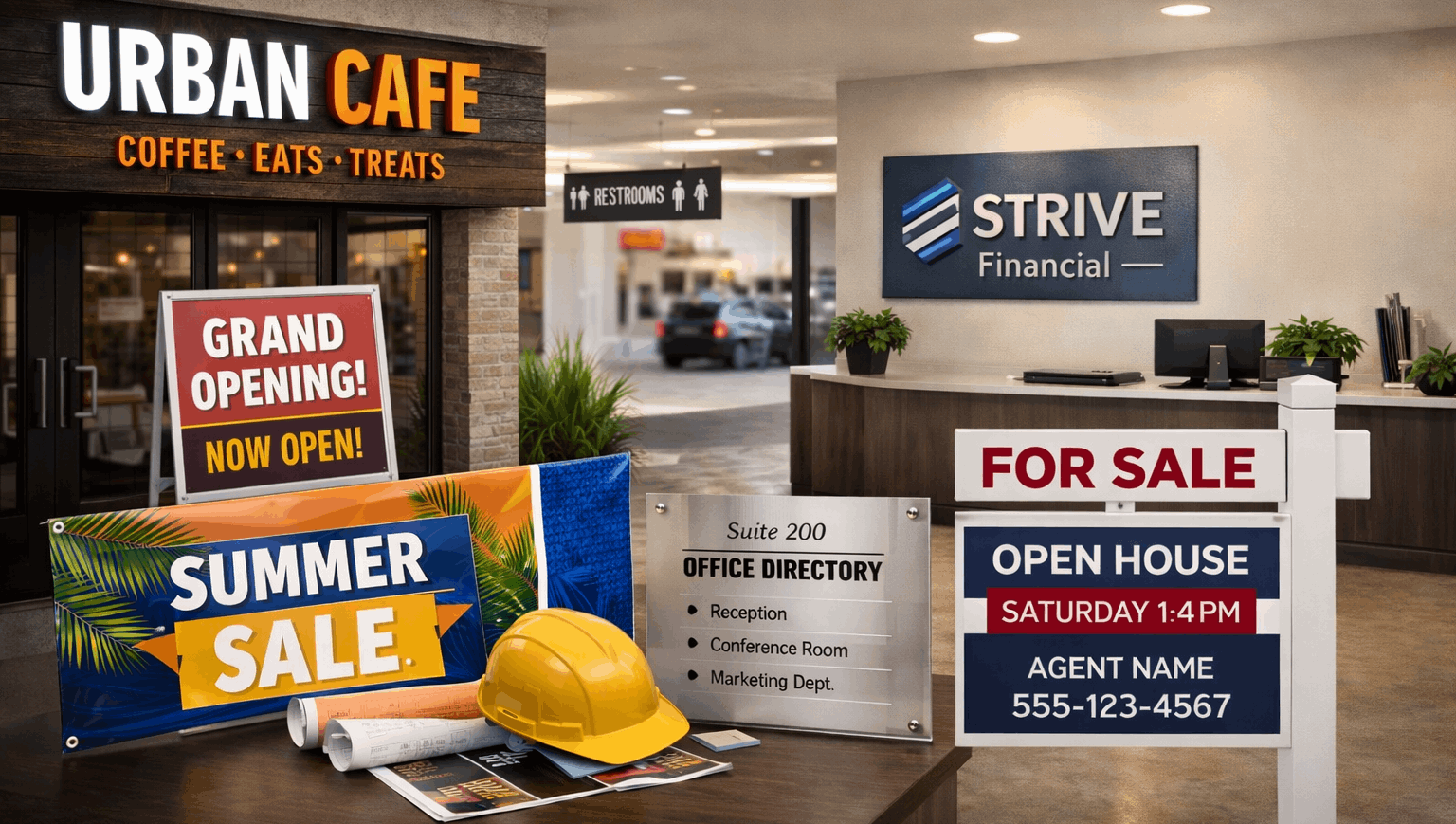
Every business needs a clear presence. In a marketplace crowded with digital messages, well-designed signage still stands out as one of the most effective tools for building brand awareness, drawing in customers, providing direction, and increasing revenue. The difference lies in the details — choosing the right type of sign, positioning it strategically, and designing it with a specific goal in mind. When signage is intentional, it works hard for your business. When it’s not, it fades into the background.
Start with the Purpose
Before you choose size, shape or style, ask yourself:
What do I want my sign to do?
Is it there to announce your business (branding), promote a sale or event (marketing), inform and direct customers (wayfinding), or comply with safety/regulatory requirements?
Where will it live?
Inside or outside your building? Indoor signage is ideal for branding, displays, and directional cues, while outdoor signage attracts attention from the street and drives foot traffic.
Who is seeing it?
A sign meant for passing cars needs bold graphics and simple messaging; a sign inside a lobby can be more detailed and artistic.
Signs Work Hard for Your Business
When done right, signage:
- Tells people who you are and what you do, even before they walk in.
- Guides visitors, reducing confusion and improving customer experience.
- Promotes offers, events, or special services.
- Reinforces your brand identity and professionalism.
- Works around the clock — a one-time investment with long-term visibility.
Inside vs. Outside: Different Needs, Different Solutions
Outdoor Signs
These are your front-line marketing tools. Placed on storefronts, sidewalks, or near busy streets, outdoor signs must be weather-resistant, highly visible, and on-brand. Common purposes include building identification, sales promotions, directional info, and wayfinding.
Common outdoor signage includes:
- Storefront signs
- Monument signs
- Sidewalk A-frame signs
- Banners
- Real estate signs
- Window graphics
Adhesive vinyl is one of the most versatile outdoor materials. Applied directly to windows and doors, vinyl graphics can display business hours, logos, seasonal promotions, privacy frosting, or full-window advertisements. It’s cost-effective, durable, and easy to update — perfect for retail promotions or storefront branding.
Indoor Signs
Inside your space, signage can enhance branding, communicate with customers, direct foot traffic, and support safety (like ADA signs). Wall graphics, floor decals, lobby displays, and menu boards are just a few indoor options.
Indoor signage may include:
- Lobby signs
- Office directories
- Wayfinding signs
- ADA-compliant signs
- Promotional displays
- Wall murals
Again, adhesive vinyl plays a major role indoors. Interior wall graphics and full wall murals can transform blank walls into powerful brand statements. From mission statements and motivational messaging to immersive branded environments, vinyl wall murals create impact without permanent construction.
Choosing the Right Materials
Different materials serve different purposes depending on location, longevity, and budget:
- Acrylic – Sleek and versatile for indoor branding or directories.
- Aluminum – Durable and polished, ideal for long-lasting outdoor signs.
- Banner & Mesh – Great for large, temporary outdoor messaging like events or sales.
- Coroplast – Lightweight, affordable, and perfect for short-term outdoor signs (like real-estate or event signage).
- Dimensional Graphics – Adds depth and interest to branding with a 3D look.
- Vinyl – Flexible and cost-effective for banners, window graphics, or vehicle graphics.
- Outdoor window and door graphics
- Interior wall murals
- Floor graphics
- Privacy and decorative films
Other options like PVC, Dibond, foam-core, or wood offer specific benefits depending on your design, durability needs, and environment. Outdoor materials need to withstand sun, wind, rain, and temperature changes, while indoor materials can focus more on aesthetics.
Planning: Timeframe, Budget, and Strategy
Before you jump into design or production, think about:
Timeframe
Custom signs can take days to weeks to design, print, and install depending on complexity, materials, and permitting (if needed). Planning ahead prevents rushed designs and costly mistakes.
Budget
Signage costs vary widely based on materials, size, lighting (like backlit signs), installation complexity, and whether professional design services are included. Balancing your goals with realistic budget expectations is key.
Location & Guidelines
Some cities and commercial centers have rules about sign size, placement, lighting, and permits. Always check local ordinances and lease guidelines.
Do You Need Signage — and How to Start?
Here’s a simple way to evaluate:
- Are customers having trouble finding your business?
- Do your competitors have bold signage that outshines you?
- Are you launching new products, promotions, or services?
- Is your branding inconsistent or hard to recognize?
If the answer is “yes” to any of these, signage can help — from brand reinforcement to generating foot traffic and increasing sales.
Reach out to AlphaGraphics McKinney to discuss your goals, materials, timeframe, and budget. They can help you assess which types of signs make sense for your space, target audience, and marketing strategy.
Whether you’re a small retailer or a growing brand, investing in the right signage — placed in the right spot at the right time — can dramatically elevate visibility, guide customers, and ultimately support your bottom line.