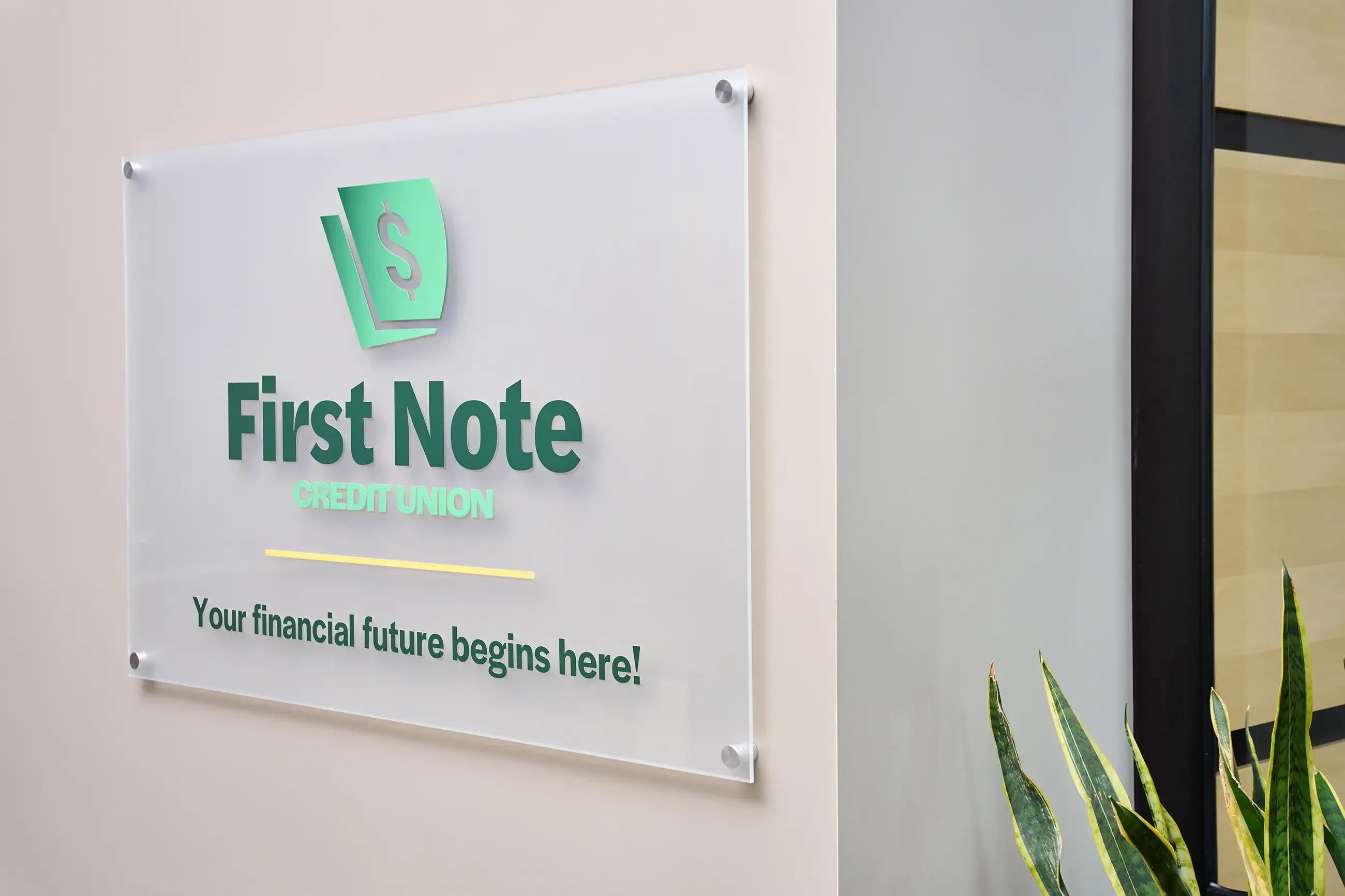
Most signs do one thing well: they communicate information.
A logo. A room number. A department name. A direction. A message.
But if your goal is to create a stronger first impression, reinforce your brand, or make a space more memorable, there may be a better option than a flat sign.
Consider adding dimension.
Dimensional signs use depth, layers, texture, lighting, or raised elements to create visual interest and make graphics stand out from their surroundings.
Instead of printing a logo directly onto a wall, a dimensional sign brings that logo off the wall. Instead of mounting a flat directory sign, dimensional elements create shadows, depth, and presence.
The result is signage that feels more intentional, more premium, and more memorable.
Our eyes are naturally drawn to contrast, depth, and shadow. A dimensional sign creates all three.
Even a small amount of depth can make a sign:
It’s the difference between hanging a printed poster and installing a piece that feels like part of the environment.
One of the most popular options is dimensional lettering. Individual letters are cut from materials such as acrylic, PVC, metal, or foam and mounted directly to a wall.
This creates subtle shadows and depth while maintaining a clean, professional appearance.
Common applications include:
Instead of displaying graphics on a single surface, multiple layers can be stacked to create visual depth.
For example:
Layered signage adds sophistication without dramatically increasing complexity.
Acrylic signs mounted with standoffs create separation between the sign and the wall. The floating appearance creates depth while maintaining a clean, modern aesthetic.
These are frequently used for:
A printed logo communicates a brand.
A dimensional logo becomes a focal point.
Raised lettering, layered construction, and specialty finishes help create stronger brand presence in customer-facing spaces.
Some organizations take dimensional signage beyond logos and create complete branded environments.
These may include:
These displays transform walls into experiences rather than decoration.
Many projects combine multiple materials to create additional contrast and visual interest.
If your sign’s only job is to communicate information, a flat sign may be enough.
But if you want your space to feel more professional, more memorable, or more aligned with your brand, dimensional signage can create a dramatically different experience.
The best signs don’t simply tell people where they are.
They help people remember where they’ve been.
Whether you’re creating a lobby display, wayfinding system, donor wall, office environment, or branded retail space, dimensional signage can help turn an ordinary sign into something people notice—and remember.