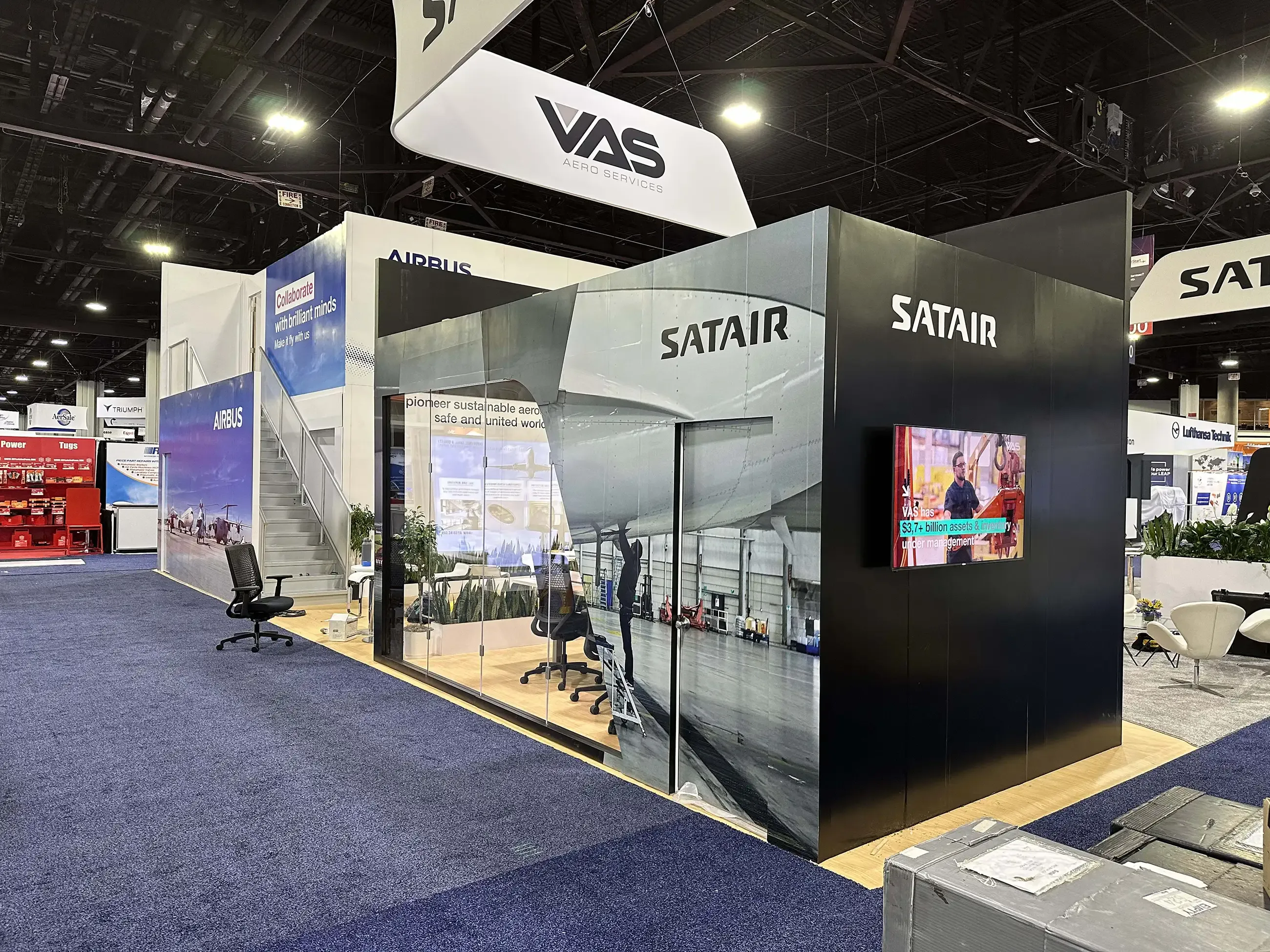
Your guide to the essential elements that turn booth space into leads.
The Essential Elements That Turn Booth Space Into Business Opportunities
A trade show booth is more than a table and a banner.
It's your storefront, sales presentation, marketing campaign, and first impression all rolled into one. Whether you're exhibiting at a local business expo, an industry conference, or a national convention, the success of your booth depends on more than simply showing up.
The best booths create visibility, communicate value quickly, attract the right visitors, and make it easy for attendees to take the next step.
If you're wondering what you actually need for a successful trade show booth, this guide will walk through the essential components every exhibitor should consider.
Before selecting graphics, giveaways, or displays, clarify what you're trying to accomplish.
Common trade show objectives include:
Your goal should influence every decision that follows.
A booth designed to collect leads looks very different from a booth designed to showcase products or facilitate meetings.
Before attendees notice your products, they notice your message.
Most trade show attendees spend only a few seconds deciding whether a booth is worth their attention.
That means your booth should answer three questions quickly:
Who are you?
Your logo and brand should be immediately visible.
What do you do?
Avoid industry jargon and internal language.
Use simple, customer-focused messaging.
Why should someone care?
Focus on outcomes and benefits rather than features.
A clear headline often outperforms paragraphs of information.
Graphics are often the first thing attendees notice.
Strong booth graphics help create visibility and communicate your value from a distance.
Common booth graphics include:
The best graphics are:
A crowded display rarely performs better than a simple one.
Depending on your booth size and goals, you may need space for conversations.
Options include:
The objective is to create an environment where meaningful conversations can happen comfortably.
Not every attendee will be ready for a sales conversation.
That's why printed materials remain important.
Consider bringing:
Business Cards
Still one of the easiest ways to exchange contact information.
Brochures
Provide a more detailed overview of products, services, or capabilities.
Sell Sheets
Ideal for highlighting specific solutions or product lines.
Product Catalogs
Helpful when attendees need to review multiple options after the event.
Printed materials should support the conversation—not replace it.
Your team represents your brand.
Branded apparel helps create a professional, cohesive appearance while making staff easy to identify.
Popular options include:
Consistent apparel helps attendees immediately recognize who belongs to your organization.
Promotional products can help extend your brand beyond the event.
The most effective giveaways are useful, memorable, and relevant to your audience.
Popular options include:
When selecting promotional products, ask:
"Will someone still be using this next month?"
The longer a promotional product remains in use, the longer your brand remains visible.
Many exhibitors invest heavily in attracting visitors but overlook what happens next.
Lead capture is one of the most important components of any booth.
Options include:
QR Codes
Allow attendees to access information instantly from their phones.
Digital Forms
Collect contact information electronically.
Event Lead Capture Systems
Many trade shows provide tools that integrate with exhibitor accounts.
Business Card Collection
Simple, familiar, and still effective.
Whatever method you choose, make sure it's easy for attendees and easy for your team to manage.
Nothing attracts attention like activity.
If possible, consider:
Demonstrations help attendees understand your value more quickly than brochures alone.
The people in your booth often matter more than the booth itself.
Effective booth staff:
The goal isn't to give a presentation to everyone who walks by.
The goal is to identify meaningful opportunities and start valuable conversations.
The event doesn't end when the exhibit hall closes.
In many cases, the real value begins afterward.
Before the event starts, decide:
Potential follow-up tactics include:
The strongest exhibitors treat the trade show as the beginning of the conversation—not the end.
Too Much Text
Attendees won't read paragraphs while walking by.
Too Many Messages
Focus on one primary idea.
Weak Branding
Your logo and identity should be immediately recognizable.
No Lead Capture Plan
Traffic without follow-up rarely produces results.
Passive Staff
Great booths invite conversations.
A successful trade show booth isn't defined by size.
It's defined by clarity.
Clear messaging, strong graphics, professional presentation, effective lead capture, and thoughtful follow-up create an experience attendees remember long after the event ends.
The most effective booths don't try to communicate everything.
They communicate the right thing to the right people—and make it easy to continue the conversation afterward.