A guide to the most common workplace safety sign types—and where each one belongs.
Safety signs play an important role in helping employees, visitors, contractors, and customers understand potential hazards, follow procedures, and navigate facilities safely.
From manufacturing floors and warehouses to offices, healthcare facilities, schools, and retail environments, effective safety signage helps communicate important information quickly and consistently.
Here's a guide to some of the most common workplace safety sign types and when they're used.
Safety signage helps organizations:
The right sign in the right place can help people make better decisions when it matters most.
Warning signs identify hazards that could cause injury or damage if proper precautions are not followed.
Common examples include:
These signs help people recognize risks before entering an area.
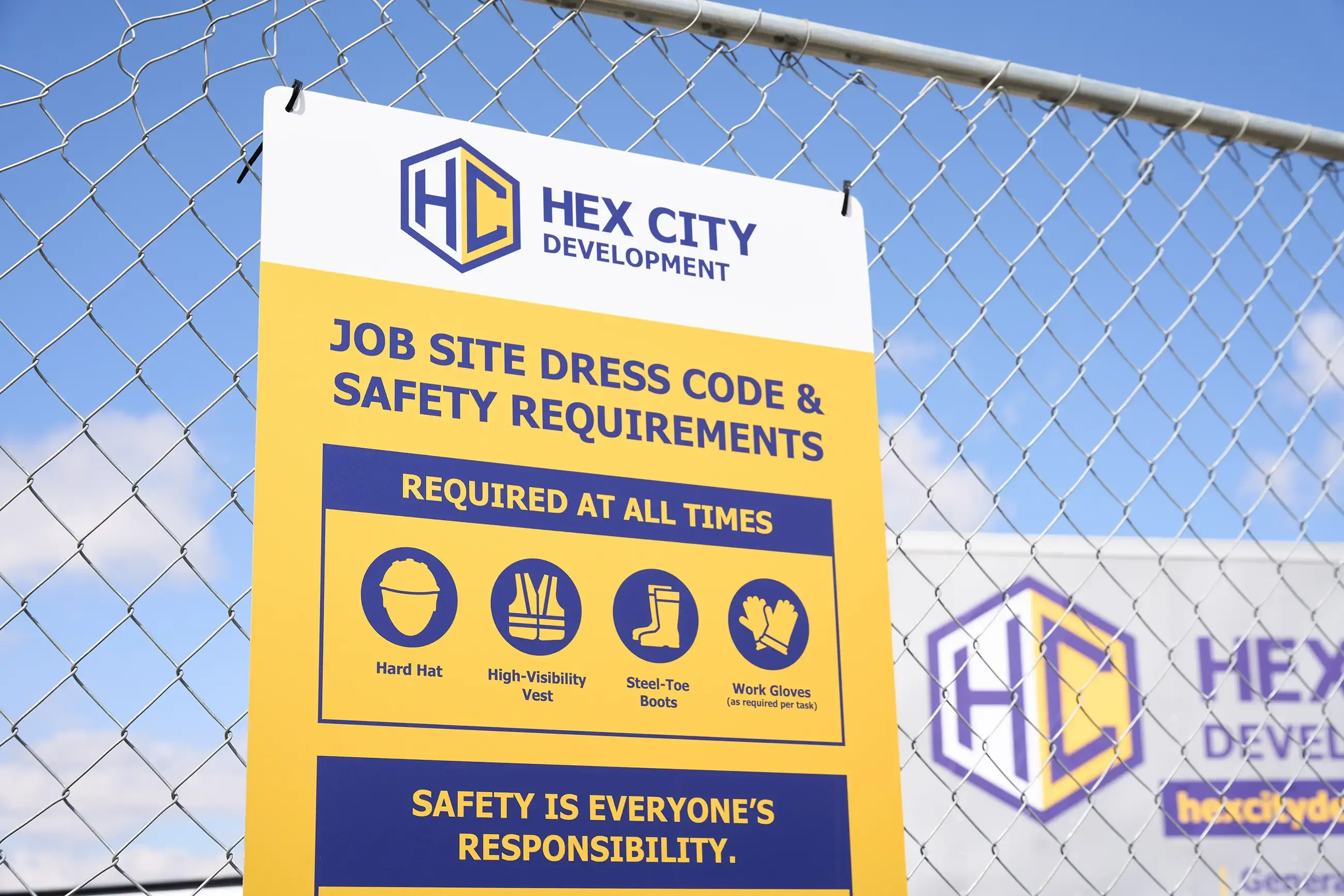
Personal Protective Equipment (PPE) signs communicate required safety gear.
Examples include:
These signs are commonly found in manufacturing, construction, industrial, and laboratory environments.
Restricted access signs help control who may enter certain spaces.
Examples include:
These signs help improve both safety and security.
Emergency signage helps people respond quickly during urgent situations.
Examples include:
Clear emergency signage can significantly improve response times during critical situations.
Fire safety signage identifies fire prevention equipment and emergency resources.
Examples include:
These signs help people locate equipment quickly during emergencies.
Many workplaces use signs to communicate operational procedures and expectations.
Examples include:
These signs help create consistency throughout a facility.
Construction environments often require additional safety communication.
Examples include:
Construction signage often changes as projects progress.
The most effective safety signs are:
Easy to See
Signs should be visible from the appropriate distance and installed where decisions need to be made.
Easy to Understand
Simple language, recognizable symbols, and clear layouts improve comprehension.
Consistent
Using standardized colors, icons, and terminology helps people recognize information more quickly.
Durable
Materials should be selected based on the environment, whether indoors, outdoors, industrial, or high-traffic.
The best safety programs don't rely on a single sign.
They use a coordinated system of:
Together, these elements help create a safer and more organized environment.
Workplace safety signs are more than compliance requirements—they're communication tools that help people understand expectations, recognize hazards, and make informed decisions.
Whether you're opening a new facility, updating an existing location, or replacing outdated signage, a thoughtful safety signage system can improve both safety and operational efficiency.
Your local AlphaGraphics team can help evaluate your facility and recommend signage solutions designed to support safety, communication, and workplace organization.