Creating an accessible environment isn’t just good customer service—it’s often a legal requirement.
The Americans with Disabilities Act (ADA) established standards designed to help people with disabilities navigate buildings and facilities safely and independently. While many business owners focus on ramps, entrances, and parking spaces, signage is another important part of accessibility.
Here’s what businesses should know about ADA signage requirements.
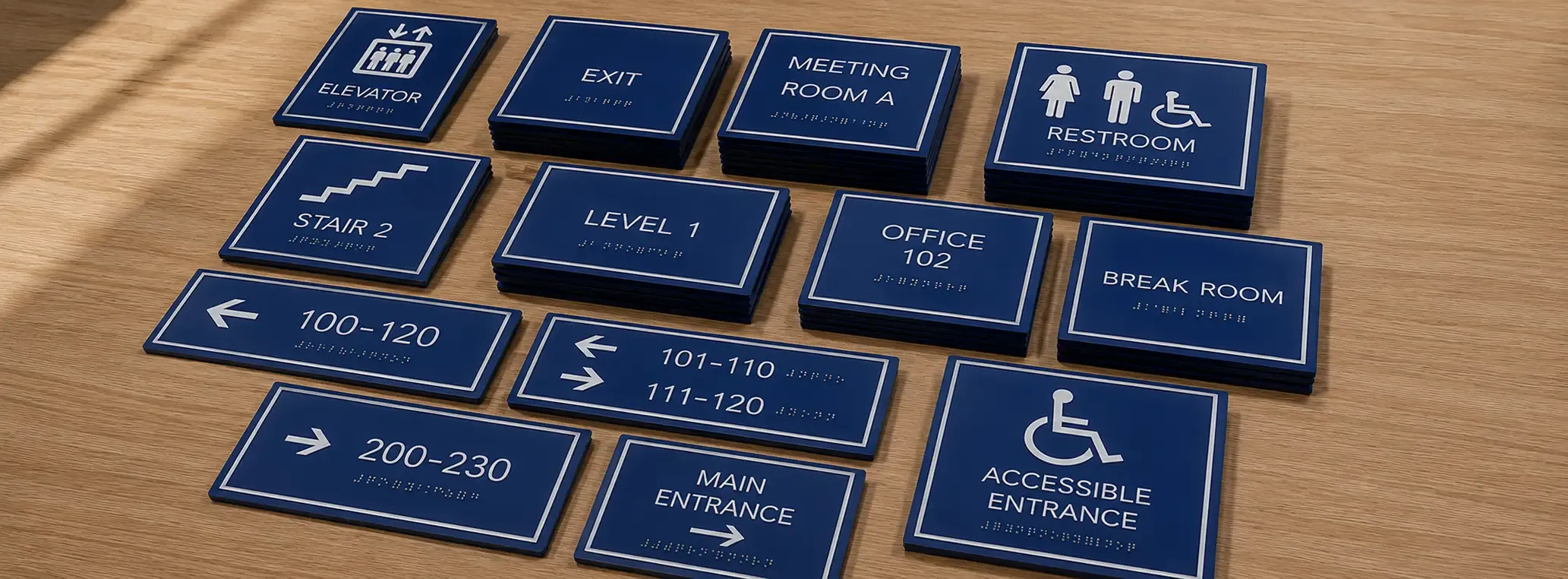
ADA signs are designed to help people identify rooms, navigate buildings, and access important information regardless of visual or physical ability.
These signs often include:
The goal is to ensure critical information can be understood by as many people as possible.
Not every sign in a building must meet ADA standards.
Generally, ADA requirements apply to signs that identify permanent spaces and rooms.
Common examples include:
If a room serves a permanent function and is identified with a sign, ADA requirements often apply.
Raised Characters
Letters and numbers should be tactile, allowing users to identify information through touch.
Braille
Many ADA-compliant room identification signs require Grade 2 Braille.
High Contrast
Text should contrast clearly against the background to improve readability.
Non-Glare Surfaces
Highly reflective materials can make signs difficult to read. ADA-compliant signs generally use matte or low-glare finishes.
Consistent Placement
Signs should be mounted in predictable locations so visitors know where to find them.
Directional and informational signs may not always require the same ADA features as permanent room identification signs.
However, they should still be designed for visibility and ease of understanding.
Examples include:
The easier a facility is to navigate, the better the experience for all visitors.
Many organizations update public-facing spaces while forgetting:
Signage should be reviewed whenever a facility expands, remodels, or changes room functions.
Many businesses assume ADA signs must look generic.
In reality, ADA-compliant signage can often be customized to align with your brand while still meeting accessibility requirements.
This allows organizations to maintain a professional, cohesive appearance throughout their facility.
Consider reviewing signage when:
Even small changes can affect signage requirements.
ADA signage helps make facilities easier to navigate, more accessible, and more welcoming for everyone who enters the space.
Because ADA requirements can vary depending on the building, application, and local regulations, it’s often helpful to work with a signage partner who understands both accessibility considerations and facility wayfinding.
Your local AlphaGraphics team can help evaluate your signage needs and recommend solutions designed to support accessibility, navigation, and a better visitor experience.