Business Growth & Marketing Ideas
October 30, 2026
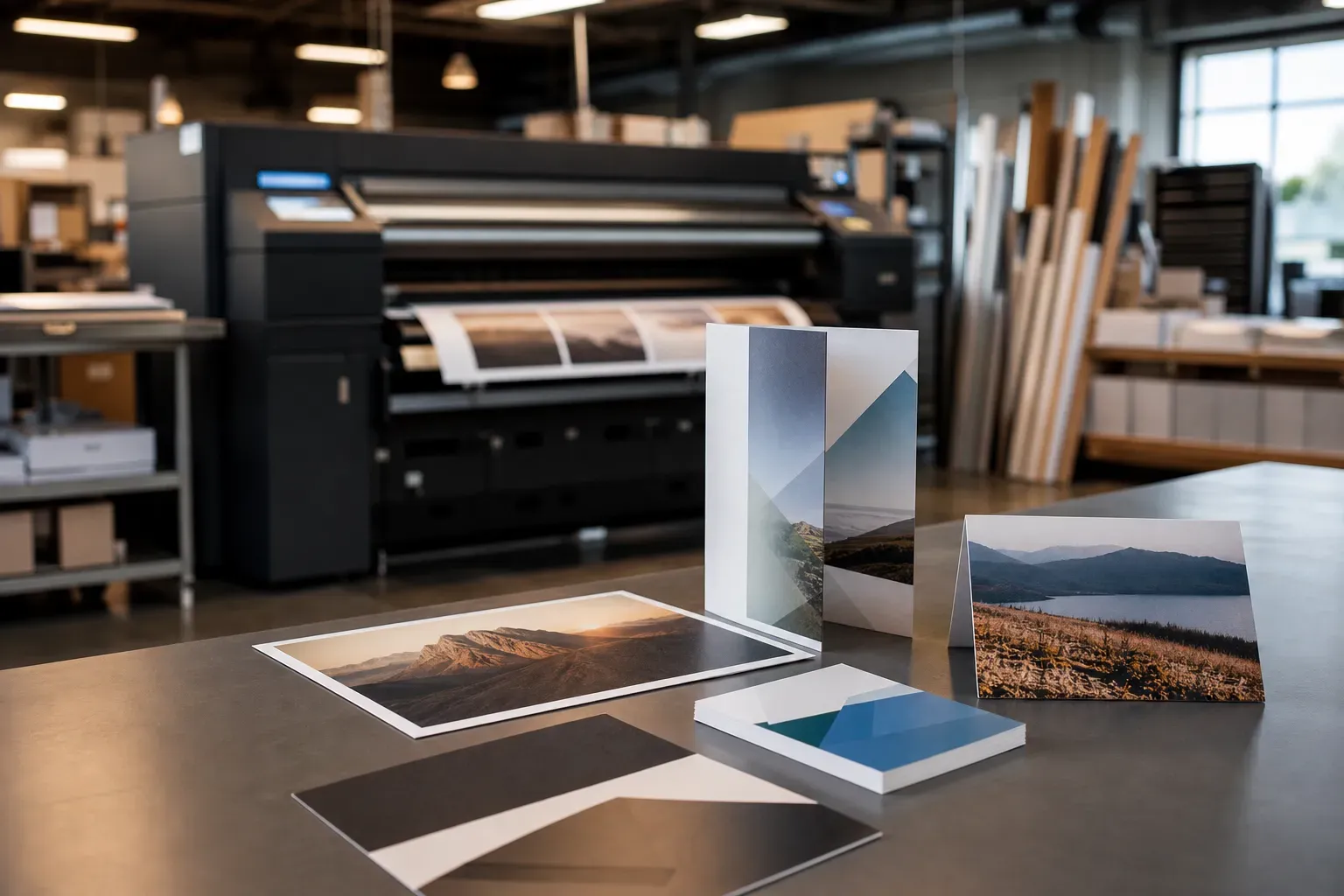
We live in a world obsessed with speed, convenience, automation, and digital transformation. Nearly everything we do today involves a screen, a click, or a swipe. Artificial intelligence can generate content in seconds, marketing campaigns can reach thousands with a single button, and business relationships often begin and end in an inbox.
Yet, something remarkable happens when you hand someone a beautifully printed business card.
They pause. They look at it. They feel the texture. Sometimes, they even comment on it.
For a brief moment, the interaction becomes more than an exchange of information. It becomes an experience.
That is the enduring power of print.
As a small-business owner, I believe profitability is not optional. A business that cannot sustain itself financially will eventually struggle to serve its customers, support its employees, or contribute to its community.
But profitability should be the foundation of a business, not necessarily the entirety of its purpose.
A successful business should create value beyond its balance sheet. It should build relationships, preserve craftsmanship, provide meaningful employment, and become part of the community it serves.
These goals are not in conflict with profitability. In fact, when pursued thoughtfully, they often reinforce one another.
Profitability allows a business to survive. Purpose gives people a reason to want it to survive.
There is something special about businesses that have served their communities for decades.
At AlphaGraphics Walnut Creek, our story goes back to 1999. Over the years, printing technology, customer expectations, and the way businesses communicate have changed dramatically.
But certain things have remained remarkably consistent.
Customers still appreciate someone who answers the phone, understands their needs, offers thoughtful advice, and takes ownership of the finished product.
A legacy business is not simply one that has been around for a long time. Longevity alone is not an accomplishment if a business stops evolving.
A true legacy business carries forward the trust, relationships, and values built over time while continuously adapting to the world around it.
It respects its history without becoming trapped by it.
And perhaps most importantly, it recognizes that every customer interaction is an opportunity to strengthen—or weaken—that legacy.
We often think of printing as a visual medium. Colors, images, typography, and design naturally come to mind.
But print is far more sensory than we give it credit for.
Sight. A beautifully designed brochure, a striking storefront sign, or an elegant invitation can communicate a message before a single word is read. Color, contrast, finish, and design influence how people perceive a business.
Touch. Consider the difference between an ordinary business card and one printed on thick, textured stock with a soft-touch finish or embossed lettering. Both may contain exactly the same information, but they do not create the same experience. The weight, texture, and craftsmanship communicate something about the brand.
Smell. Anyone who has walked into a print shop or opened a freshly printed book knows that paper and ink have a distinctive character. The subtle scent of a new book or printed publication can evoke memories and emotions that a digital file simply cannot.
Sound. Print has its own soundtrack—the turning of pages, the opening of a carefully crafted package, the rustle of a brochure, or the satisfying sound of a substantial business card being placed on a table. And then there is the most valuable sound of all: a customer saying, "Wow, this looks amazing!"
Taste. Perhaps the most indirect connection, but think about beautifully printed restaurant menus, food packaging, wine labels, or specialty product boxes. Print does not change the flavor of the food, but it can shape expectations and anticipation before the first bite or sip.
And then there is what some might call the sixth sense—the emotional connection.
That feeling of receiving a handwritten card on beautifully printed stationery. The pride of seeing your company's name on a storefront for the first time. The excitement of holding your newly published book. The memories preserved in a printed photograph.
These are experiences that extend well beyond ink and paper.
What we print, how we print, and what we print on all influence the message—and the experience.
I am a strong believer in technology. Digital printing, automation, sophisticated design tools, and artificial intelligence have transformed our industry, often for the better.
Technology allows small printing businesses to become faster, more efficient, more creative, and more accessible.
But technology is a tool, not the purpose.
A QR code on a beautifully printed brochure can connect someone to a digital experience. Personalized printing can make communication more relevant. Modern production technology can make previously impossible ideas economically practical.
The opportunity is not to choose between print and digital.
It is to bring the two together in ways that create more meaningful customer experiences.
Digital can deliver information instantly. Print can give that information a physical presence. Together, they can make communication more powerful.
Behind every print job is a person, a business, or a story.
A new entrepreneur ordering their first business cards. A nonprofit preparing for a fundraising event. A family celebrating a milestone. A local restaurant launching a new menu. A business owner investing in signage that represents years of hard work.
To a printing company, these may appear as orders, job tickets, or invoices.
To the customer, they often represent something much bigger.
This is where small businesses have a unique opportunity.
We can listen. We can advise. We can care about the outcome rather than simply completing the transaction.
And we can remember that the customer is not buying just paper, ink, or signage. They are trusting us with something that matters to them.
That trust is not easily automated.
When I think about the future of small-business printing, I do not see an industry that must fight technology to survive.
I see an industry that can use technology to rediscover and amplify what makes it valuable: craftsmanship, creativity, physical experiences, and human relationships.
For legacy businesses, the challenge is to preserve what made them special while having the courage to change what no longer serves customers.
For small-business owners, the challenge is to build profitable companies that also create lasting value for employees, customers, and communities.
And for all of us in the printing industry, perhaps the opportunity is to remind the world that not every meaningful interaction needs to happen on a screen.
Sometimes, the most powerful way to connect with someone is still to put something remarkable in their hands.
Because the best print doesn't simply communicate a message. It creates an experience worth remembering.