Print Production & Setup
October 11, 2026
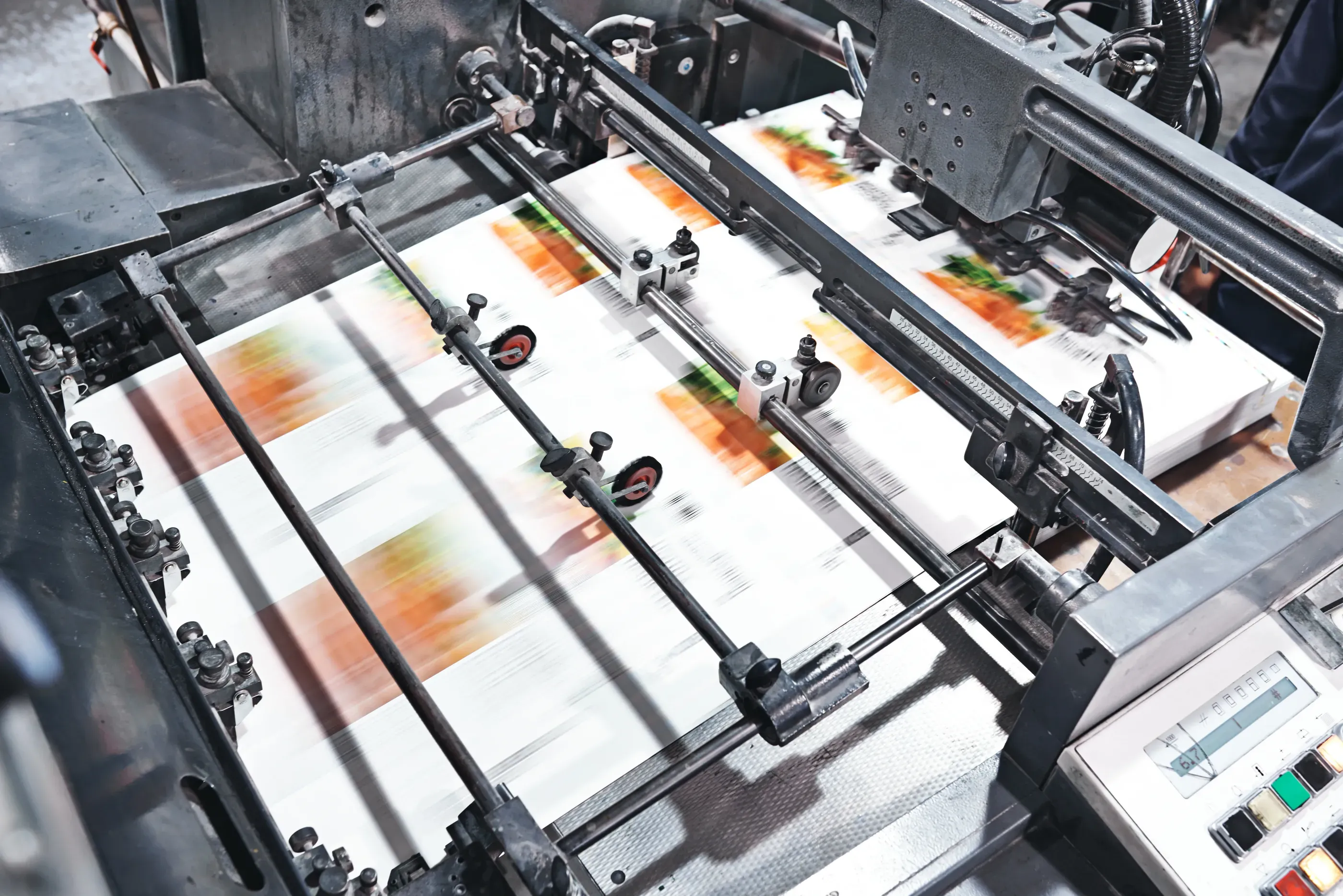
Variable data printing (VDP) is a digital printing method that changes text, images, offers, or other elements on each printed piece within a single print run, without stopping the press. Instead of producing 5,000 identical postcards, VDP produces 5,000 unique postcards, each personalized to the individual receiving it. Personalization can be as simple as a name and address or as sophisticated as a customized offer, a location-specific image, and a unique QR code linking to a personalized landing page.
The technology has been around since the 1980s, but advances in digital printing have made it far more accessible and affordable. According to research from the Association of National Advertisers, personalized direct mail achieves response rates of 6% compared to 2% for non-personalized campaigns. That 3x lift is why businesses across nearly every industry have moved toward VDP for their printed marketing.
If your business sends any kind of printed communication to customers, whether it's postcards, mailers, invoices, catalogs, or event invitations, VDP lets you make each piece relevant to the person receiving it. Here's how it works, what it costs, and how to use it effectively.
VDP mechanics are straightforward once you understand the three components: a design template, a data source, and digital printing technology that ties them together.
The template. This is your base design, the layout that stays consistent across every printed piece. Your logo, brand colors, overall structure, and static content (like your business address or a tagline) remain fixed. Within this template, you designate variable fields, placeholders where personalized content will be inserted.
The data source. This is typically a spreadsheet or a CRM export containing the information you want to personalize. Each row represents one recipient. Each column represents a data point: first name, last name, address, purchase history, membership tier, preferred location, or whatever else you're personalizing. The quality of this data directly determines the quality of your output. If the spreadsheet has "JOHN" in all caps, the postcard prints "JOHN" in all caps. If an address field is blank, that piece prints with a blank space.
The merge and print. Specialized software maps each column in your data file to the corresponding variable field in the template. When the digital press runs, it pulls the correct data for each piece in sequence, printing one personalized version after another without pausing. A run of 10,000 pieces with 10,000 unique combinations completes in roughly the same time as a static run.
Most businesses underestimate the critical step of data preparation. Clean, consistent, properly formatted data underpins a successful VDP campaign. Misspelled names, inconsistent address formats, duplicate records, and outdated information all print exactly as they appear in the spreadsheet. An experienced print partner can help you clean and format your data before it ever touches the press.
VDP can change virtually any element on a printed piece. The most common variable elements include:
Text. Recipient names, addresses, account numbers, membership IDs, personalized headlines, location-specific messaging, and custom calls to action. A dental office sending appointment reminders can print each patient's name, their dentist's name, and their specific appointment date on every card.
Images. Product photos can change based on purchase history. A home improvement company can show a deck photo to customers who recently bought lumber and a kitchen photo to customers who purchased appliances. Regional imagery can change based on the recipient's zip code.
Offers and incentives. Different discount amounts, product recommendations, or loyalty rewards based on customer tier, purchase frequency, or spending level. A restaurant chain can send a 10% discount to frequent diners and a 25% "we miss you" offer to lapsed customers in the same print run.
Barcodes and QR codes. Each piece can carry a unique barcode, QR code, or PURL (personalized URL) that links to a landing page customized for that specific recipient. This is one of the most powerful VDP applications because it creates a measurable bridge between print and digital.
Maps and location data. A retail chain can print a map showing the recipient's nearest store, including the address, phone number, and hours for that branch.
Now, here's what experienced VDP users know that most guides skip: there's a line between personalization and surveillance, and crossing it costs you trust. Printing someone's name and a relevant offer based on their general customer segment is effective. Printing specific browsing behavior, detailed purchase dates, or overly granular data points makes recipients uncomfortable. The research supports this. While 72% of consumers say they respond to personalized messaging, intrusive personalization can have the opposite effect. The rule of thumb: personalize based on broad categories (customer tier, general interests, location, recency of purchase), not specific behavioral surveillance.
The performance data on VDP is consistent across multiple independent sources and worth understanding before committing budget.
Response rates. Personalized direct mail achieves response rates of 5 to 9% for house lists (your existing customer database) compared to under 1% for most digital channels, according to the Data & Marketing Association. Non-personalized direct mail sits around 2%. That means VDP roughly triples the response rate of static printed mail.
Response rate lift by personalization depth. Name personalization alone lifts response rates by approximately 44% compared to generic mail. Adding personalized offers, relevant imagery, and location-specific content can lift response rates by 50 to 300% depending on the campaign and audience quality. Research from Keypoint Intelligence found that campaigns using five personalized elements (name, offer, geography, imagery, and messaging) averaged 19.4% higher conversion rates than campaigns using only three.
ROI. Direct mail ROI averages 29 to 35%, outperforming paid search and social media in long-term conversion according to the Association of National Advertisers. VDP campaigns specifically have been shown to add 39% ROI over generic print campaigns. VDP's higher per-piece cost (typically 10 to 25% more than static printing) is more than offset by higher response and conversion rates.
Retention impact. In Keypoint Intelligence's 2024 survey, 97% of direct mail users reported higher response rates with personalized or customized direct mail, with 56% describing the lift as "significantly higher."
These aren't marginal improvements. For a business spending $5,000 on a direct mail campaign, the difference between a 2% response rate and a 6% response rate represents three times as many leads from the same spend.
VDP applies across industries, but the use cases that consistently deliver the strongest results fall into several categories.
Direct mail campaigns. This is the most common application. Postcards, letters, and self-mailers personalized with recipient names, relevant offers, and targeted messaging. A local print and marketing partner can design, print, and mail a VDP campaign as a single coordinated project.
Customer reactivation. Businesses use purchase history data to identify customers who haven't bought in 60, 90, or 120 days and send them personalized "we miss you" offers. A carpet cleaning company sends reminders specifically timed to each customer's last cleaning date. A car dealership sends service reminders based on each vehicle's maintenance schedule.
Event invitations and follow-ups. Personalized invitations with the recipient's name, table assignment, or agenda items feel significantly more professional than generic invitations. Post-event follow-ups can reference the specific sessions a registrant attended.
Invoices and statements. Financial documents, membership renewal notices, and account statements naturally use VDP. Adding marketing messages to these transactional documents (an upsell offer on an invoice, a loyalty reward balance on a statement) turns routine mail into a marketing opportunity.
Loyalty and membership programs. Custom loyalty cards with unique member numbers, personalized welcome kits, tiered reward communications that reflect each member's current status and earning potential.
Fundraising and nonprofit campaigns. Donor acknowledgments referencing specific gift amounts and dates. Appeal letters with personalized giving levels based on the donor's history. Matching gift information specific to the donor's employer.
Catalogs and product recommendations. VDP enables catalogs where the featured products change based on the recipient's purchase history or stated preferences. Instead of sending the same 48-page catalog to every customer, you send a version where the products on the cover and the first few pages reflect what that specific customer is most likely to buy.
The highest-performing VDP campaigns don't treat print as an isolated channel. They connect print to digital in a measurable loop that compounds results.
Here's what that looks like in practice. A personalized postcard includes a unique QR code for each recipient. When scanned, it opens a personalized landing page that greets the recipient by name and presents the same offer from the postcard. The landing page captures the conversion (a form fill, a purchase, an appointment booking) and triggers a follow-up email sequence. The entire chain, from printed postcard to digital conversion, is trackable at the individual recipient level.
This cross-channel approach isn't theoretical. The data supports it directly. Research cited by multiple industry sources shows that customers who receive direct mail within a week of a related online interaction are significantly more likely to convert than those who receive either channel alone.
Personalized URLs (PURLs) work on the same principle. Each postcard carries a unique URL (yourcompany.com/john-smith) that routes to a customized page. Every visit to that URL is attributable to the printed piece.
For businesses already running digital campaigns, VDP adds a physical touchpoint that reinforces the digital message in a format people hold, read, and pin to a refrigerator instead of scrolling past in 0.3 seconds.
VDP costs more per piece than static printing. That's the tradeoff for personalization, and it's worth understanding the actual numbers.
Static offset printing for a standard postcard might run $0.08 to $0.15 per piece at volume. The same postcard produced with VDP on a digital press typically costs $0.15 to $0.30 per piece, a premium of roughly 10 to 25% depending on the complexity of personalization and the run length.
On a 5,000-piece campaign, that's the difference between $400 to $750 for static printing and $750 to $1,500 for VDP. Add postage, design, and data preparation, and a complete VDP direct mail campaign for 5,000 pieces typically runs $2,500 to $4,500 all in.
The economics justify the premium when you look at results per dollar. A static campaign at 2% response generates 100 leads from 5,000 pieces. The same campaign with VDP at 6% response generates 300 leads from 5,000 pieces. If your average customer value is $200, the static campaign produced $20,000 in potential revenue. The VDP campaign generated $60,000 with only a few hundred dollars more in printing costs.
The cost per lead drops dramatically with VDP even though the cost per piece goes up. That's the calculation that matters.
If your business has only done static printing and you want to run your first VDP campaign, here's a practical starting path.
Start with your existing customer data. Your CRM, email list, POS system, or even a well-maintained spreadsheet contains the information you need. Export it with at minimum: first name, last name, and mailing address. If you have purchase history, customer tier, or location data, include those too.
Clean the data before anything else. Remove duplicates. Standardize address formats (USPS format preferred). Fix obvious name errors. Fill in gaps where possible. Delete records with incomplete addresses. The time you spend here pays for itself by avoiding waste.
Pick one campaign with a clear goal. Don't try to personalize everything on your first run. Start with a customer reactivation mailer or a new mover welcome campaign. Use name personalization plus one other variable element (a tailored offer or a location-specific detail). Measure the response rate against your previous static campaigns.
Work with a print partner who handles VDP regularly. Data mapping, template setup, proofing, and quality control require experience. A full-service print and marketing partner can manage the entire workflow from data cleanup through print and mail, which significantly reduces the risk of errors on your first campaign.
Build tracking into the design. Include a unique offer code, a dedicated phone number, a QR code, or a PURL so you can measure exactly how many responses came from the VDP campaign versus other channels.
Using customer data for VDP means you're handling personal information, which comes with responsibility. While direct mail doesn't fall under the same regulations as email marketing (CAN-SPAM doesn't apply to physical mail), state-level privacy laws are expanding. California's CCPA and Virginia's CDPA both include provisions that affect how businesses collect, store, and use consumer data, including for marketing.
Best practices include using only data customers have knowingly provided or that you've collected through legitimate business transactions. Don't purchase low-quality third-party lists with questionable sourcing. Give customers an easy way to opt out of future mailings. Store your data securely and limit access to only those who need it to execute campaigns.
Personalization builds trust when it's done transparently. It destroys trust when customers feel their data was used without their knowledge or in ways they didn't expect.
Variable data printing is a digital printing process that lets you customize individual elements on each printed piece (names, images, offers, barcodes) without stopping the press. Instead of printing 5,000 identical pieces, you print 5,000 unique pieces, each personalized to the recipient, in a single production run.
VDP typically costs 10-25% more per piece than static printing. On a standard postcard campaign, that translates to roughly $0.15 to $0.30 per piece for VDP versus $0.08 to $0.15 for static. The higher per-piece cost is consistently offset by significantly higher response rates, which lowers the cost per lead.
Industry research shows personalized direct mail achieves 5 to 9% response rates for house lists versus 2% for non-personalized mail. The lift depends on how many elements you personalize and the quality of your data. Name-only personalization lifts response by about 44%. Full personalization (name, offer, imagery, location, messaging) can lift response by 50 to 300%.
At minimum, first name, last name, and mailing address. For more effective personalization, include customer tier or segment, purchase history or recency, location data, and any preference information you've collected. The more relevant data you have, the more you can tailor each piece.
Yes. Most VDP workflows accept data exported as a CSV or Excel file from virtually any CRM, POS system, or email platform. The key is clean, consistently formatted data. Your print partner can advise on the format they need and help clean the data if necessary.
A mail merge typically changes only name and address fields in a document. VDP goes much further, changing images, offers, colors, layouts, barcodes, and entire content blocks based on data-driven rules. Mail merge is a subset of VDP. True variable data printing allows for comprehensive personalization across every visual and textual element.
No. Businesses use VDP for business cards, name badges, event materials, invoices, statements, catalogs, loyalty cards, certificates, packaging, and any printed piece where individualized content adds value. Direct mail is the most common application, but the technology applies wherever personalization improves the recipient's experience.
Static printing sends the same message to everyone and hopes it resonates. Variable data printing sends the right message to the right person and measures whether it worked. The technology is proven, the performance data is clear, and the cost premium pays for itself through dramatically higher response rates.
For businesses that already send printed communications to customers, VDP is one of the most efficient upgrades available. It doesn't require a bigger budget. It requires better use of the data you already have.
If you're ready to explore what variable data printing can do for your next campaign, reach out to our team. We handle everything from data preparation and template design to printing and mailing, so every piece that goes out is personalized, accurate, and ready to perform.