
Event & Promotional Signs
November 18, 2026
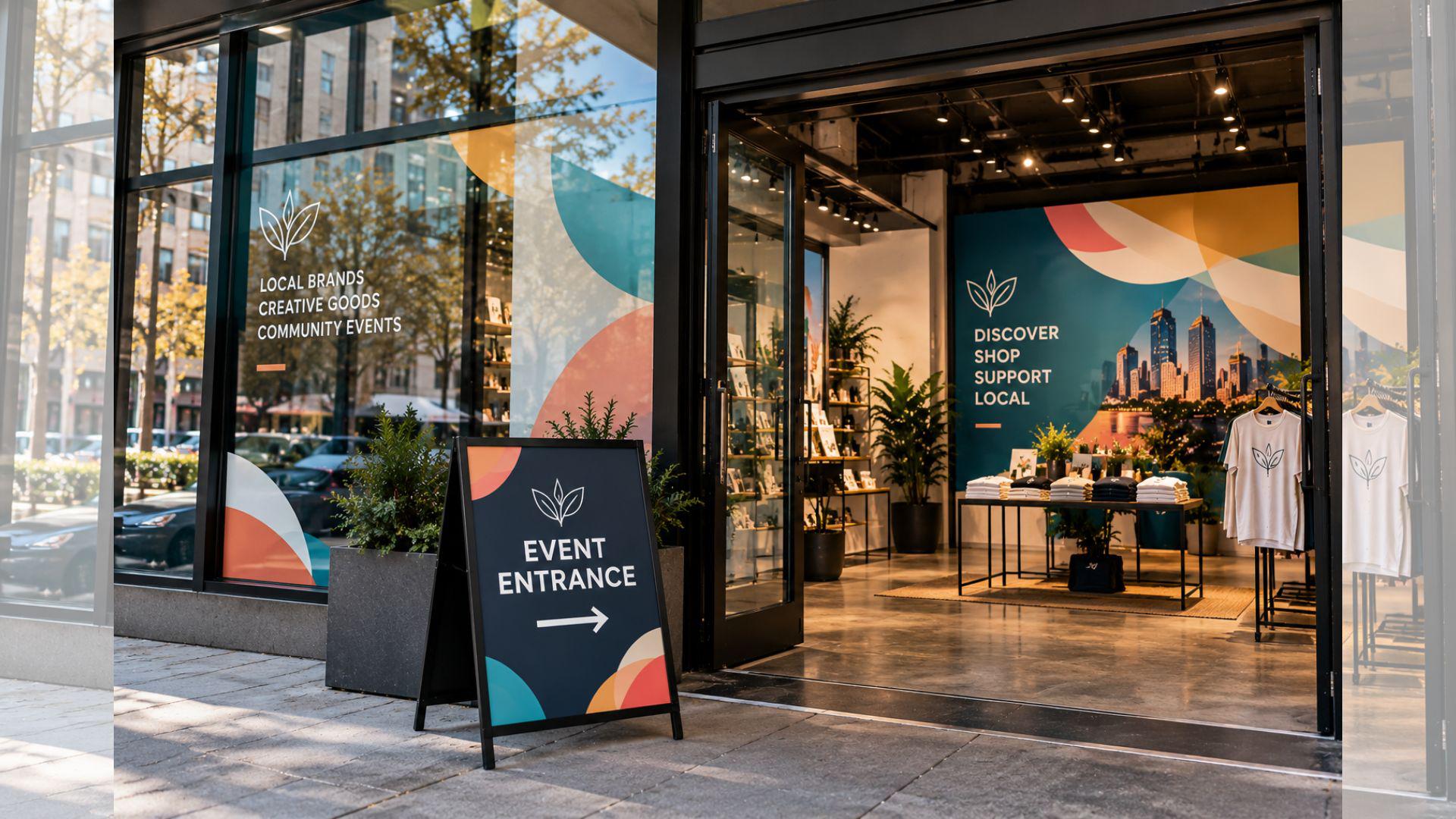
A temporary space does not have to look temporary.
Pop-up shops, product launches, seasonal activations, recruiting events, nonprofit events, and short-term retail installations often have the same challenge: the physical space was not designed specifically for the brand using it.
Blank walls, generic windows, unfamiliar entrances, and borrowed fixtures can make even a well-planned event feel unfinished.
That is where event signage printing in Dallas becomes part of the environment rather than simply something you add at the entrance. Temporary graphics can help define the space, guide visitors through it, communicate promotions, and create a consistent visual experience without requiring a permanent renovation.
The key is deciding what each surface should accomplish before choosing the graphic that goes on it.
It is easy to begin by asking whether you need a banner, wall decal, window graphic, or floor graphic.
A better first question is: What does this area need to do?
The storefront may need to attract attention from outside. The entry should confirm that visitors have reached the right place. Interior walls can establish the brand or explain the offer. Floor graphics may help direct movement. A backdrop can create a focal point for photography, presentations, or product displays.
Once those jobs are clear, the graphic format becomes much easier to choose.
For a pop-up or short-term activation, the customer experience can begin before anyone opens the door.
Window graphics can identify the event, promote an offer, introduce the brand, or simply make an otherwise generic storefront feel intentional.
The amount of information should depend on how the window will be viewed. Someone walking past can absorb more than someone seeing the space from a moving vehicle. If the storefront faces a parking lot or street, keep the message large and simple. If people will be standing close to the glass, supporting details can come into play.
The goal is not to fill every inch of glass. It is to make the purpose of the space understandable quickly.
Temporary wall graphics can do something freestanding signage often cannot: make the existing room feel like it belongs to the event.
That might mean applying a large brand statement behind a registration desk, creating a feature wall around a product display, adding directional messaging, or turning an empty wall into a more useful part of the experience.
For businesses considering wall decals printing in Dallas, placement matters just as much as the artwork.
A wall behind the main display may deserve a large branded treatment. A narrow hallway may be better used for directional information. A blank area near the exit might carry a final call to action.
Rather than decorating every wall, prioritize the surfaces visitors are most likely to notice.
Floor space can be valuable during events because visitors naturally look down when they are moving through an unfamiliar environment.
That makes floor graphics particularly useful for wayfinding. They can direct visitors toward registration, identify a queue, lead people toward a featured area, or reinforce a promotion near a display.
The strongest floor graphics usually communicate quickly. If someone has to stop walking and read a paragraph on the floor, the graphic is probably trying to do too much.
Use walls and printed handouts for detailed information. Let the floor help people move.
Not every surface needs to compete for attention. Most temporary spaces benefit from one area that clearly feels like the visual center of the experience.
That could be a branded backdrop behind a product display, a photo wall, a presentation area, a registration desk, or the main promotional feature.
A freestanding backdrop can create a defined photo moment without making permanent changes to the venue, but it can serve more than photography. It can also help visitors immediately understand where the main activity is happening.
Banners can be especially useful in temporary environments because they create visual presence without requiring permanent fixtures.
A larger banner can identify the event from across a room, highlight a sponsor, call attention to a product category, or help fill visual space above displays and activity areas.
That makes banners useful when floor space is already being used for merchandise, seating, tables, or visitor movement.
The same rule still applies: the farther away the banner will be viewed, the simpler the message should be.
One common problem with temporary spaces is that each graphic is designed independently. The window looks one way. The banner uses a different visual treatment. The wall decal introduces another style. The floor graphics feel unrelated again.
Individually, each piece may look fine. Together, the environment feels assembled rather than designed.
Instead, establish a simple visual system before production: one primary message, one core color system, one typography direction, one consistent logo treatment, and one naming convention.
Each piece can still have a different layout because it performs a different job. Consistency does not mean copying the exact same artwork onto every surface.
Walk through the location as though you have never been there before. Notice what visitors see first, what confirms they have arrived, where they need to go next, where they are most likely to stop, and what they should understand before they leave.
Those moments can become the framework for the signage plan.
For example, a storefront graphic can attract attention. An entry sign confirms the event. A floor graphic directs visitors toward registration. A wall graphic establishes the brand once they enter. A backdrop creates the main focal point. A final sign near the exit provides the next step.
That creates a journey rather than a collection of individual signs.
Temporary does not automatically mean that every removable material is appropriate for every location.
Before production, confirm:
What the surface is made from
Whether it is painted, glass, flooring, or another finish
Whether the space is owned or leased
How long the graphic will remain installed
Whether the venue has restrictions on adhesives or installation
Whether the graphic will be used indoors or outdoors
That should happen before material and installation decisions are finalized, not after the graphics arrive.
For temporary events, removal is part of the production plan.
Know when the space has to be restored, who is responsible for removing the graphics, and whether any elements need to be saved for reuse.
Some freestanding displays and banner systems may be useful again. Other temporary graphics may be produced specifically for one location or activation.
Thinking about that before production helps avoid designing reusable pieces around information - such as dates or one-time offers - that immediately makes them obsolete.
Temporary graphics can support pop-up retail, product launches, corporate events, recruiting events, fundraisers, community events, short-term promotions, conferences, and other environments where branding is needed for a limited period.
They can be appropriate for many temporary spaces, but suitability depends on the wall surface, finish, material, installation method, and property requirements. Confirm the surface and venue rules before production.
Wall graphics become part of the existing surface, while banners are separate printed pieces that can be hung or displayed using their own hardware or support system. The right choice depends on the space, viewing distance, installation requirements, and how long the display will remain in place.
Yes. Window graphics, wall decals, banners, floor graphics, and freestanding displays can all be part of the same event environment. They should share a consistent visual direction while each handles a different communication need.
Only when reuse makes sense. Avoid putting dates, location-specific details, or one-time promotional language on pieces you expect to use again. Other materials can be designed specifically for the current event.
The best temporary environments do not try to disguise the fact that they are short-term. They simply make every visible surface feel purposeful.
Windows attract attention. Wall graphics establish the environment. Floor graphics help people move. Banners create visibility from farther away. A strong focal point gives the space an identity.
When those elements work together, a borrowed or temporary location can still feel fully connected to the brand behind it.
AlphaGraphics Park Cities | North Dallas provides event signage, wall graphics, banners, and other printed materials for businesses and organizations creating pop-ups, promotions, events, and short-term branded environments.
Contact AlphaGraphics Park Cities | North Dallas to discuss graphics and signage for your next temporary space.