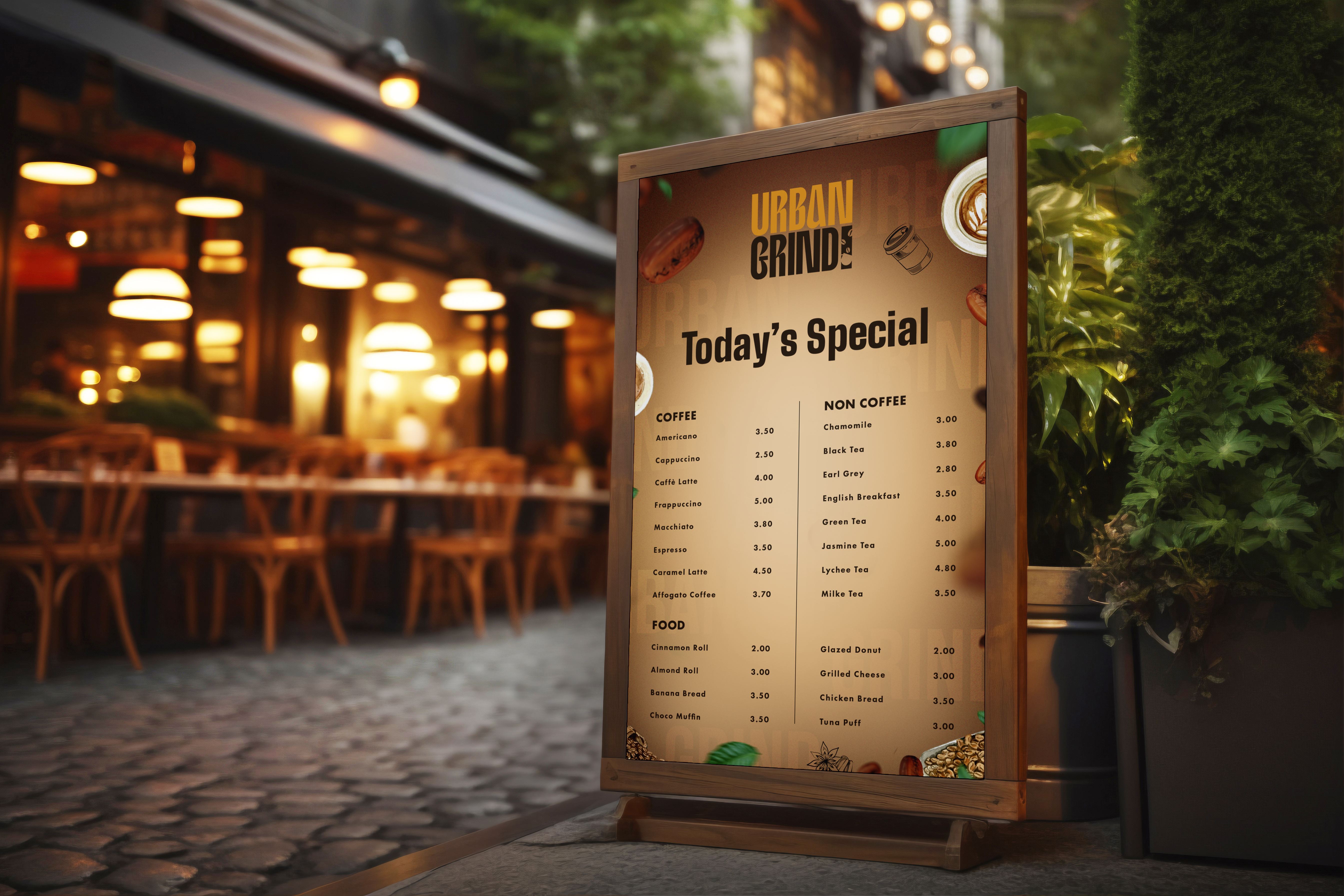
When customers walk into your restaurant, their first impression isn’t shaped solely by the ambiance or the aroma of the food. Many times, it’s your menu board that captures attention and sets the tone for their experience. That seemingly simple display has the power to influence choices, guide decisions, and even drive up your profits.
Great menu boards don’t just inform—they persuade. Leveraging the psychology behind effective signage can transform your menu board into your restaurant’s secret sales weapon.
This blog will guide you through the role of menu boards, the psychology behind their design, and how you can use these insights to create menu boards that maximize your restaurant's profitability.
The Role of Menu Boards in the Customer Journey
A menu board is more than just a list of offerings; it’s a critical touchpoint in your customer’s dining experience. Here’s why it matters:
A Memorable First Impression
Your menu board often serves as the customer’s first interaction with your brand. An engaging, well-designed menu board creates a professional image and sets expectations for the quality of their meal.
A Communication Tool
Menu boards convey key information—what you offer, how much it costs, and what might make the experience special. A cluttered or disorganized menu can overwhelm customers, while a clear, visually appealing one makes it easy for them to explore their options.
Speeding Up Decision-Making
Have you noticed how often customers feel rushed when scanning a menu? An effectively designed menu board minimizes choice overload, speeds decision-making, and enhances overall satisfaction.
Key Psychological Principles in Menu Board Design
The effectiveness of your menu board isn’t just about how appealing it looks—it’s also about how smartly it’s designed. Here’s how psychology plays a role:
Strategic Placement of High-Margin Items
-
High-margin menu items should be strategically placed in areas where the eye naturally falls, often referred to as “eye magnet zones.” For most people, this means the top-right corner or the center of the board.
-
Use visual hierarchies, such as bold text, icons, or borders, to emphasize these profitable dishes.
The Power of Visual Cues
-
Images, icons, and colors can evoke emotions and guide choices.
-
For example, bright, warm colors like red and yellow encourage appetite (ever wonder why fast-food brands love yellow?), while green may be used to convey healthfulness or freshness.
Price Anchoring and Decoy Pricing
-
Place a premium-priced item at the top of a category. This makes mid-tier options seem like a better value by comparison.
-
Introduce “decoy pricing” by including a slightly cheaper but less desirable option, nudging customers toward your desired high-margin item.
Simplifying Choices
Elements of an Effective Menu Board
Your menu board isn’t just a work of art—it’s an operational tool. To make sure it’s working as hard as you are, focus on these core elements:
Clear Typography
Organized Layout
-
Group menu items into clear sections, such as appetizers, entrees, and drinks. This creates a logical flow and makes navigation more intuitive for customers.
Consistent Branding
Use of Lighting
Dynamic Digital Menu Boards
-
Digital boards offer flexibility for updates or dayparting (e.g., breakfast menus in the morning, dinner menus by evening). They also provide interactive elements for promotions and customer engagement.
The Financial Benefits of Thoughtful Menu Board Design
What can you expect from an investment in effective menu boards? The rewards are numerous and measurable:
-
Boosted High-Margin Sales: Clever menu placement and design strategies naturally guide customers toward your most profitable items.
-
Improved Accuracy: Clear and well-organized boards reduce order misunderstandings, leading to fewer errors in the kitchen.
-
Lower Wait Times: A menu that’s easy to understand cuts down on decision-making delays, speeding up the ordering process.
-
Customer Retention: A seamless dining experience means customers are more likely to return and recommend your restaurant to others.
Real-World Examples of Successful Menu Boards
Here are some inspiring stories from restaurants that aced their menu board designs:
-
Modern Bites Café redesigned their menu board to highlight signature sandwiches using bold fonts and vibrant images. Result? A 20% increase in sales for those items.
-
Tasteful Tacos switched to a digital menu board format, enabling them to display daily specials and integrate loyalty discounts. They saw increased engagement and a significant uptick in repeat customers.
-
Sunny’s Breakfast Spot used price anchoring to showcase premium brunch options, resulting in higher average ticket values.
How AlphaGraphics Can Help Create Menu Boards That Sell
Achieving an ideal menu board design takes experience, creativity, and an understanding of customer psychology. That’s where AlphaGraphics comes in.
We’re experts at combining aesthetics and strategy to deliver custom menu boards tailored to your restaurant’s needs. From concept to creation, our services include:
-
Professional graphic design.
-
High-quality large-format printing.
-
Dynamic digital menu board solutions.
We ensure every menu board is crafted with attention to detail, using high-quality materials for durability and clarity.
Invest in Menu Boards That Maximize Profits
Your menu board isn’t just a sign—it’s a significant part of your restaurant’s branding, customer experience, and profitability. Thoughtfully designed menu boards don’t just inform; they persuade, guide, and delight.
Are you ready to transform your restaurant’s menu board and drive more sales? Contact AlphaGraphics Buckhead today at 404-504-6088 or visit us online to get started!