Creating an Informative and Welcoming Environment with Medical Signage: Why Design Matters
The Hidden Cost of Patient Confusion
The moment a patient decides to seek care, a layer of stress is immediately added: the anxiety of navigating a large, unfamiliar medical facility while already feeling ill or worried.
The simple act of arrival is often the first point of failure in the patient experience. They circle the parking lot looking for the correct entrance, hesitantly approach a reception desk, and then stare down a long corridor hoping to guess the right turn. This immediate confusion is not just inconvenient, it actively undermines the goal of quality care.
Unclear or absent medical signage leads to delayed appointments, forces staff to act as constant guides, and generates immediate patient frustration. This systemic confusion translates directly into wasted time and negative patient satisfaction scores.
Effective, well-designed signage solves this. It’s a critical, silent assistant that proactively guides, informs, and reassures. In this post, we’ll detail the journey to operational excellence, transforming confusion into confidence through strategic signage design.
The cost of poor signage extends far beyond a delayed appointment; it impacts your operational budget, staff morale, and overall reputation.
The Anxiety of Arrival and First Impression
Patient anxiety begins the second they arrive on your property. When exterior signage is illegible, obscured, or poorly placed, patients start their visit already stressed. They worry about being late, missing a crucial directional cue, or entering the wrong area. This initial friction is difficult to overcome and taints the entire visit. The first impression is often determined by the signage before the patient even steps through the door.
The Financial Drain of Cognitive Load
Medical facilities operate on tight schedules, and physician time is invaluable. When patients are forced to stop and ask for directions, they can interrupt critical staff members and medical professionals. Research indicates that interruptions are a primary cause of burnout and reduced productivity in clinical settings.
Every minute a nurse spends directing a patient to the lab is a minute stolen from clinical care. When navigation is intuitive, you reduce the patient’s cognitive load, allowing them to focus solely on their health, while freeing your team to focus on high-priority clinical duties. Poor signage directly increases call volume and desk interruptions.
Compounding Frustration and Exclusion
Effective healthcare is inclusive healthcare. When design choices prioritize aesthetics over utility—using small, low-contrast fonts, complex language, or glossy, reflective surfaces—you actively exclude key patient populations. The elderly, vision-impaired, and ESL patients rely heavily on clear, accessible design. Ignoring these needs leads to compounding frustration and can pose a serious ethical barrier to receiving care.
The Risk of Non-Compliance
Beyond the experience, there are serious, non-negotiable legal stakes. Ignoring ADA Signage requirements set by the Americans with Disabilities Act (ADA)—including height, contrast, and mandatory tactile/braille elements—leaves your facility vulnerable to costly litigation and fines. Non-compliant signage is a serious liability that no facility can afford to overlook.
Building the Foundation of Seamless Navigation
The solution is not just installing more signs; it’s building a comprehensive, unified wayfinding system. This system must address the patient’s journey from the moment they exit the highway to the moment they leave the examination room.
Exterior Wayfinding: Guiding the Arrival
The exterior system must manage high-volume traffic and guide the patient through the large campus environment.
-
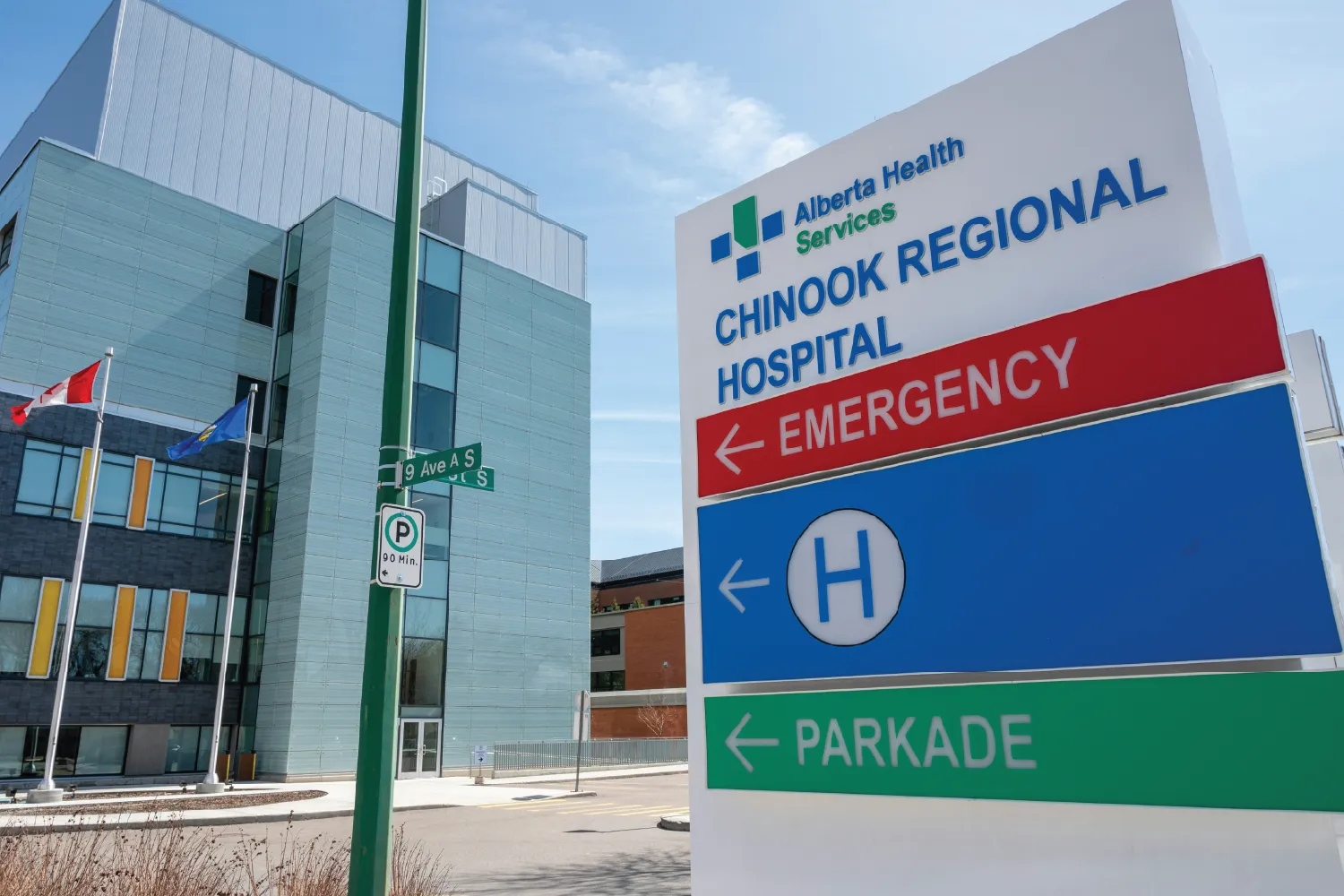
Site Mapping: Use large, clear monument signs and directional markers at every decision point leading up to the facility. These signs must clearly delineate entrances, visitor parking, patient drop-off areas, and emergency access. High-visibility and appropriate lighting are non-negotiable here.
-
Vehicle Traffic Flow: Signs should manage vehicular movement efficiently, using established design principles to prevent bottlenecks and ensure pedestrian safety.
Interior Wayfinding: Seamless Direction
Once inside, the system must maintain momentum and clarity.
-
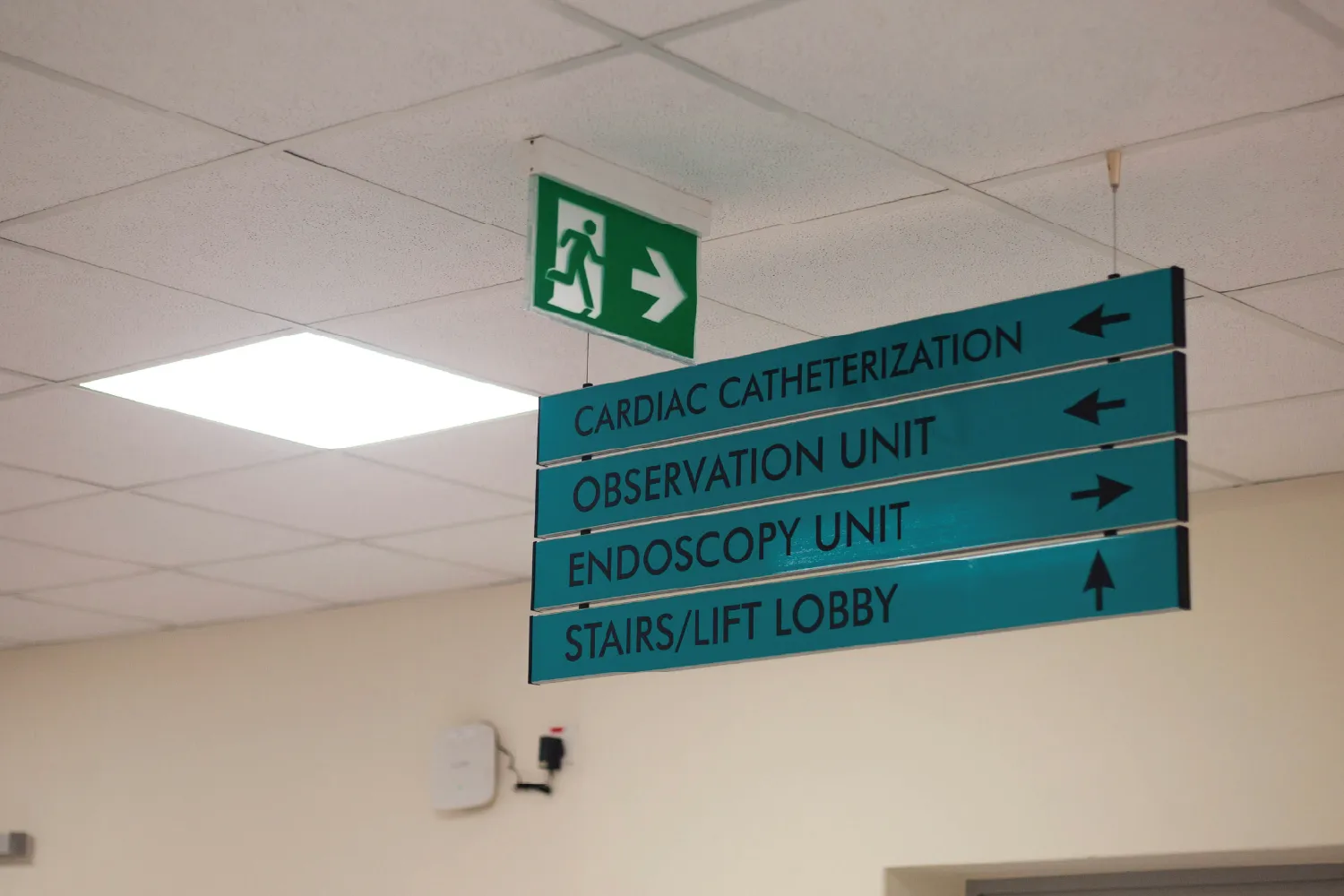
Directional Signage: Strategically place large, readable signs at all crucial decision points—hallway junctions, elevator banks, and stairwell entrances. These must employ clear directional arrows and, where appropriate, floor maps.
-
Identification Signage (Room Plaques): Every permanent room, including restrooms, consultation rooms, and clinics, must be clearly labeled. Identification signage must be tactile and include Braille elements to adhere to accessibility standards.
-
Overhead vs. Wall-Mounted: Utilize overhead or large, hanging signs for long-distance navigation (e.g., "Oncology Center ") and use smaller, wall-mounted signs for intimate, localized directions (e.g., "Exam Room 3").
The Power of Consistency and Compliance
A wayfinding system collapses if it is inconsistent. The design elements must be unified across all buildings, floors, and departments.
-
Color Coding: Implement a logical, building-wide color coding scheme (e.g., all Radiology signs are blue, all surgical departments are orange). This creates an instant, intuitive mental map, helping patients recognize their destination from a distance.
-
Universal Design Principles: Prioritize large, highly contrasted, and clear sans-serif typography for maximum legibility. All elements must follow ADA standards for mounting height, tactile graphics, and glare reduction.
Digital Wayfinding (An Emerging Tool)
For large medical centers, integrating digital solutions is key. Interactive kiosks, which allow patients to type in their destination and receive visual or printed directions, are effective tools that complement, rather than replace, physical signage.
Elevating Communication and Compliance
Moving beyond simple direction, strategically placed signs transform a facility's ability to communicate and adhere to regulations, optimizing staff output.

Beyond Direction: Informational Posters and Office Displays
Effective signage doesn't just point; it informs, empowers, and educates.
-
Patient Education: Use attractive office posters and wall graphics in waiting rooms to display health tips, preventative care reminders, or seasonal health information (e.g., flu shot reminders). This turns otherwise passive wait times into opportunities for learning.
-
Service Promotion: Informing patients about services they may not know the facility offers (e.g., nutrition counseling, smoking cessation programs, or telehealth options). This is a subtle, effective form of internal marketing.
-
Staff Identification: Clear signs indicating staff roles (e.g., "Check-in," "Billing," "Nurse’s Station") proactively guide patient questions to the correct staff member, reducing confusion and increasing efficiency.
Regulatory and Safety Signage (Guaranteed Compliance)
Compliance signs are mandatory and must be executed with precision.
-
Mandatory Displays: Ensure legally required documents like HIPAA privacy notices and the Patient Bill of Rights are displayed clearly and prominently.
-
Safety Signs: Exit signs, fire extinguisher locations, and evacuation maps must meet strict codes for visibility and placement. These high-visibility safety graphics guarantee that, during an emergency, patients and staff can quickly orient themselves.
Workflow Efficiency Achieved
The ultimate goal of this informational signage is to minimize repetitive questions asked of your reception and clinical staff. Clear signs communicating expected wait times, required documentation ("Please have your insurance card ready"), and step-by-step check-in procedures dramatically reduce bottlenecks at the front desk, allowing staff to focus on high-priority clinical tasks rather than simple administrative guidance.
Creating a Healing, Branded Environment
The final layer of transformation involves utilizing signage as a powerful branding and aesthetic tool to create a genuinely healing environment.
Creating the Welcoming Lobby Display
The lobby is your facility's first handshake. The main lobby display must be warm, inviting, and professional, reflecting the quality of care provided.
-
Mission and Values: Use attractive, high-quality graphics to clearly convey the facility's commitment to patient care and community. This builds immediate trust.
-
Material Choice: The materials chosen for your primary logo and mission statement are critical. Using high-end, textured materials like brushed aluminum, glass, or polished acrylic conveys quality, permanence, and attention to detail.
Large Format Graphics as Aesthetic Elements
Large Format graphics are essential tools for softening the often-sterile medical environment.
-
Wall Murals: Utilizing large-scale, calming graphics—such as nature scenes, local landscapes, or subtle abstract patterns—transforms long, clinical hallways into relaxing, destressing environments. This subtle shift in ambiance has been shown to positively impact patient recovery and satisfaction.
-
Window Film: Decorative or frosted film is used for privacy in consultation rooms or sensitive areas, adding a layer of architectural design while maintaining confidentiality.
Integrating Dynamic Digital Screens
Digital screens in waiting areas allow for dynamic content that manages patient expectations and keeps them engaged. Use them for real-time appointment call-ups, health news feeds, facility announcements, and even relaxing visual content, replacing static television screens with purposeful communication.
Partnering for a Future-Proof Signage System
A signage project in a medical environment is complex and requires specialized expertise that goes beyond simply printing posters. Your facility needs a future-proof system built for longevity and adaptability.
Durability and Maintenance
In a healthcare setting, all materials must be engineered for durability. Signage must withstand frequent cleaning, exposure to harsh chemical disinfectants, and constant high traffic. We prioritize specialized materials like non-porous plastics, high-grade aluminum, and finishes that resist fading, ensuring the investment lasts for years.
Scalability and Future-Proofing
Healthcare facilities are constantly changing—departments move, doctors join and leave, and services expand. Our modular system designs allow for easy, inexpensive internal changes. For instance, room name or provider name inserts can be updated in moments without replacing the entire fixture, ensuring the investment in custom medical signage remains adaptable and cost-effective over its lifecycle.
Integration with Facility Design
Signage should never look like an afterthought. We work to seamlessly integrate all visual elements with your interior architecture, brand colors, and lighting strategy. A professional signage audit ensures that every piece is optimally lit and positioned to maximize visibility and architectural harmony.
The Professional Partner
The value of working with a dedicated signage expert lies in our understanding of the complexities of healthcare regulations, including the non-negotiable requirements of ADA, fire codes, and facility-specific accreditation standards. We design not just for direction, but for compliance and psychological comfort.

Your Next Steps to Operational Excellence
Your signage system is a critical component of patient safety, operational efficiency, and overall brand perception. It is a relatively small investment that yields massive returns in patient peace of mind and staff productivity.
By replacing confusion with clarity and anxiety with reassurance, well-designed medical signage transforms your physical building into the healing environment your patients deserve.
Ready to take the next step toward a seamlessly navigable and welcoming facility?
Get a quote on our custom medical signage.