Business Growth & Marketing Ideas
May 30, 2023
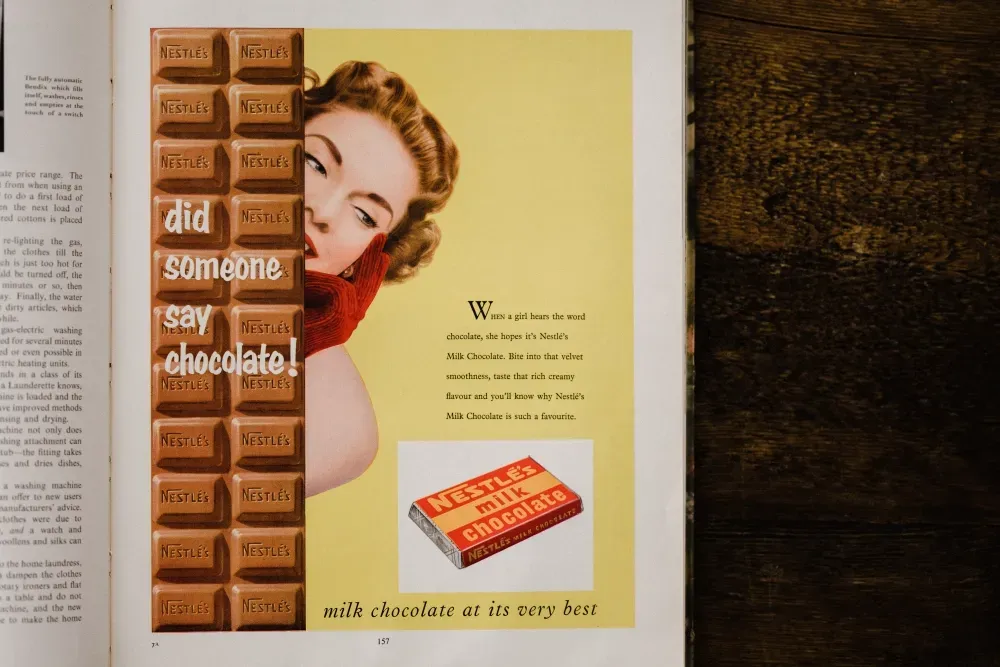
Print advertising has been a staple of the marketing world for over a century. Despite the rise of digital advertising, print advertising continues to play an important role in reaching and engaging with consumers. We'll take a look at the evolution of print advertising, from its early days to its current form, and why it remains a relevant advertising medium today.
Dating back to around 3,000 BC, an intriguing find in Thebes, Egypt, reveals one of the earliest recorded instances of print advertising. A fragment of papyrus written by Haru the Weaver, who incorporated elements of self-promotion at the end of his letter. Promotion that bears some striking resemblance to modern day advertising. Moving forward a few thousand years, modern print advertising has its roots in the 19th century. When magazines and newspapers first started to use advertising as a way to generate revenue. Back then, advertisements were simple and straightforward, with minimal graphics and text used to promote products and services. Over time, as competition increased, advertisers began to get creative with their ads, using eye-catching illustrations and clever headlines to grab the attention of readers.
The mid-20th century saw the rise of "Mad Men" style advertising, with agencies producing memorable and influential print ads. This was the Golden Age of print advertising, when advertisements appeared not just in magazines and newspapers, but on billboards and transit. Advertisers used print ads to build brand recognition and create an emotional connection with consumers, using humor, aspirational images, and persuasive copy.

With the advent of digital technology, the advertising landscape changed dramatically. The rise of the internet and mobile devices has led to a shift in the way consumers access information and engage with brands. Digital advertising has become the go-to for many advertisers, offering new and innovative ways to reach consumers. But despite this, print advertising has continued to evolve and remains a relevant advertising medium.
In recent years, a fascinating transformation has taken place. While larger print runs exceeding 500,000 copies have experienced a decline, a surge in smaller print runs has emerged. This shift can be attributed to various factors, including advances in technology and the increasing demand for personalized content. With the advent of variable data imaging and variable print runs, a whole new realm has opened up. Enabling businesses and individuals to create customized printed materials tailored to specific audiences or even individual recipients. This evolution has not only breathed new life to the print market but has also sparked innovation and creativity. Ushering in an era of boundless possibilities for printed media.
Print advertising continues to be an effective way to reach consumers, even in today's digital age. Here are a few reasons why:
Print advertising has come a long way since its early days, evolving and adapting to the changing advertising landscape. While digital advertising may be the dominant form of advertising today, print advertising remains a relevant and effective way to reach consumers. By targeting specific demographics, offering tangibility and trust, appearing in relevant contexts, and building brand awareness. Print advertising continues to play an important role in the marketing world.