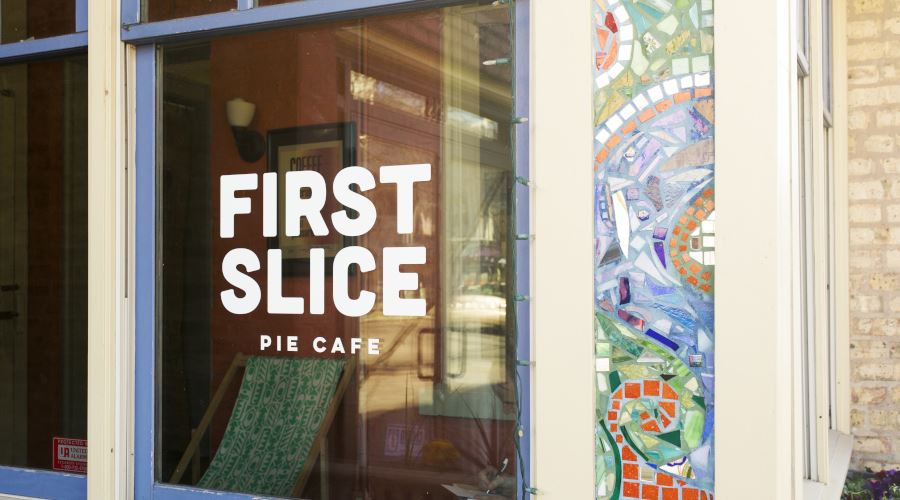
68% of consumers say they have entered a restaurant they had not planned to visit because of its signage. But the window graphic that pulls someone in from the sidewalk follows different rules than the menu board that upsells them at the counter.
For restaurants, the physical space IS the marketing. Your storefront, windows, sidewalk, and interior all work as a system -- each touchpoint has a different job, a different audience, and different design rules. This guide covers every signage touchpoint from street-level visibility to the point of purchase, with specific costs, sizes, and best practices for each.
The Customer Journey: 4 Signage Touchpoints
Before choosing any signage, it helps to map the customer journey through your physical space. Every potential diner passes through four distinct zones, and each one demands a different approach.
Touchpoint 1: From 50+ feet away -- storefront visibility. The goal here is simple: be seen. Your signage needs to communicate "restaurant" and your cuisine type to someone driving past or walking down the block. Bold colors, large type, and high contrast are non-negotiable at this distance.
Touchpoint 2: From 10 feet -- sidewalk engagement. Now the person is close enough to read details. This is where A-frames, outdoor menus, and window graphics do their work. The goal shifts from "notice us" to "come inside."
Touchpoint 3: At the door -- hours, specials, first impression. The customer is deciding right now. Door graphics, posted hours, health ratings, and a visible glimpse of the interior all factor in. A confusing or cluttered entrance loses people at the finish line.
Touchpoint 4: Inside -- menu boards, POP, upselling. They are in the door. Now signage drives order value. Menu boards, table tents, counter cards, and wall-mounted specials all influence what and how much they order.
Window Graphics: Your Biggest Free Billboard
Your windows face the street every hour of every day. That is free advertising space, and most restaurants underuse it.
Types of window graphics include:
-
Full window wraps -- complete coverage with a printed image or branded design
-
Frosted vinyl -- an etched-glass look that adds privacy while displaying logos or text
-
Perforated window film -- the best of both worlds: full graphic visible from outside, see-through from inside
-
Cut vinyl lettering -- individual letters and logos applied directly to the glass
Costs range from $15 to $50 per square foot installed, depending on the material and complexity. Perforated film tends to run toward the higher end; cut vinyl lettering sits at the lower end.
Best practice: keep about 40% of your window space clear so passersby can see the interior. A restaurant that looks alive and busy draws people in. A restaurant behind fully covered windows looks closed or uninviting.
Your window graphics should communicate three things: your hours, your cuisine type, and one compelling food image or brand element. That is it. Resist the urge to list your entire menu.
Seasonal swaps are a smart investment. Changing your window graphics quarterly signals "new" to regular passersby who have tuned out your existing signage. Budget $200 to $400 per seasonal update for a standard storefront.
A-Frame and Sidewalk Signs
The A-frame sidewalk sign is the single most cost-effective foot traffic driver for restaurants. A quality A-frame with interchangeable inserts costs $80 to $300, and you can swap messaging daily.
Placement matters more than design. Position your A-frame 15 to 20 feet from your entrance, angled toward the dominant foot traffic flow. If foot traffic comes from the left, angle the sign to face left.
Content that works:
-
Daily specials with a specific price ("Lunch combo: $12.95")
-
Happy hour times and drink specials
-
A personality-driven or humorous message that stops people mid-stride
Printed inserts vs. chalkboard: Chalkboards have a casual charm, but printed inserts look more professional, remain legible in rain, and hold up over time. A set of 10 seasonal inserts costs $50 to $100 and gives you variety for months.
A restaurant in a high-foot-traffic area can expect a 10 to 15% increase in walk-ins from a well-placed, well-messaged A-frame sign. At an average ticket of $15 to $25, that pays for the sign in a single weekend.
Outdoor Menu Displays
60% of diners check the menu before deciding to enter. If you do not have a visible menu near your entrance, you are losing those decision-makers.
Wall-mounted menu cases solve this. The recommended setup is a weatherproof case with LED backlighting so the menu remains readable after dark. Quality illuminated cases cost $200 to $600 depending on size and finish.
Best practice: show 6 to 8 items with photos, not your full menu. This is a curated highlight reel, not a comprehensive listing. Feature your best-value items to anchor pricing expectations -- if someone sees a $13 entree on the outdoor menu, they walk in feeling comfortable about affordability.
Update the outdoor menu display whenever you change your core menu. An outdated outdoor menu with discontinued items or old prices damages trust before the customer even walks in.
Interior Menu Boards: Digital vs. Printed
Once a customer is inside, the menu board becomes your most important sales tool. For QSR and fast-casual restaurants, a well-designed menu board can increase average order value by 8 to 12%.
Digital menu boards:
-
Cost: $500 to $2,000 per screen plus monthly software fees of $20 to $50/screen
-
Easy to update remotely -- change prices and specials in minutes
-
Support animated content and dayparting (show breakfast menu until 11 AM, lunch after)
-
Best for restaurants with frequent menu changes or multiple dayparts
Printed menu boards:
-
Cost: $200 to $800 for a professional wall-mounted board
-
More permanent, with a crafted feel that suits certain restaurant concepts
-
Harder and more expensive to update (requires reprinting)
-
Best for restaurants with a stable core menu
The recommended approach for most fast-casual restaurants: use printed boards for your core menu items that rarely change, and add a single digital screen for rotating specials and limited-time offers. This balances cost with flexibility.
Point-of-Purchase Displays
The counter area and tabletops are prime real estate for driving impulse purchases. These small-format pieces have outsized impact.
-
Table tents: $1 to $3 per piece. Promote desserts, drinks, catering services, or loyalty programs. A table tent advertising your catering menu costs $2 but can generate a $500 catering order.
-
Counter cards and displays: $50 to $150 each. Position near the register to promote add-ons, gift cards, or upcoming events.
-
Wall-mounted specials boards: $100 to $300. Highlight a "featured item" near the ordering area.
Key principle: point-of-purchase signage should promote one item or one action per piece. A table tent that tries to sell dessert, catering, and a loyalty program simultaneously sells none of them effectively.
Seasonal and Promotional Graphics
Restaurants that update their signage quarterly outperform those that set it and forget it. Seasonal graphics create a sense of freshness and urgency that keeps regular passersby engaged.
Effective seasonal signage includes:
-
Window clings for holidays and seasonal themes ($50 to $150 per set)
-
Banners for events, patio openings, or grand re-openings ($35 to $120 each)
-
Yard signs for patio season or parking lot visibility ($8 to $15 each)
Recommended cadence: update signage at least four times per year -- spring patio opening, summer specials, fall/holiday themes, and a new-year refresh.
Budget: $300 to $600 per quarter covers a rotating seasonal signage package for a typical single-location restaurant. That is $100 to $200 per month -- less than a single boosted social media post, with longer-lasting visibility.
What Makes Restaurant Signage Fail
Even good signage fails when it breaks basic rules. The most common mistakes:
-
Too much text. Keep any sign meant to be read from a distance to 7 words or fewer. Your window is not a menu.
-
Poor lighting. Signs that disappear at night lose your entire dinner rush. Backlit, spotlit, or internally illuminated signage is essential for evening-service restaurants.
-
Outdated information. Old hours, discontinued prices, or last season's specials tell customers you do not pay attention to details. If your signage says you close at 9 PM but you now close at 8 PM, that is a one-star review waiting to happen.
-
Generic stock photos. Customers can tell the difference between a stock photo of a burger and your actual burger. Invest $200 to $500 in a professional food photography session -- those images will be used across signage, menus, and social media for years.
Frequently Asked Questions
Do I need a permit for a sidewalk sign?
Rules vary by city and even by block. Most municipalities allow A-frames during business hours with size restrictions (typically 24x36 inches or smaller) and a requirement that they do not block pedestrian right-of-way. Check your local zoning office or business association before placing one.
How long do window graphics last?
Quality vinyl window graphics last 3 to 5 years outdoors. Perforated window film typically lasts 2 to 3 years before requiring replacement. Indoor window graphics can last 5 to 7 years since they are not exposed to UV and weather.
Can I install window vinyl myself?
Small cut vinyl lettering can be a DIY project. Full window wraps and perforated film should be professionally installed -- bubbles, wrinkles, and misalignment are highly visible on glass and undermine the professional image you are trying to project.
What is the best way to photograph my food for signage?
Natural light near a window, a clean background, and an overhead or 45-degree angle produce the best results. Avoid flash. Even a smartphone can produce usable images with good lighting. For signage that will be enlarged to poster or window size, hire a professional photographer -- the $200 to $500 investment pays for itself across every piece of signage and marketing material you produce.
Get a Free Signage Audit for Your Restaurant
Your local AlphaGraphics center can do a free signage audit of your restaurant -- reviewing what is working, what is missing, and what could drive more walk-ins. From window graphics and A-frames to menu boards and table tents, a signage specialist can map your customer journey and recommend the highest-impact improvements for your budget. Contact your nearest AlphaGraphics center to schedule a walkthrough.