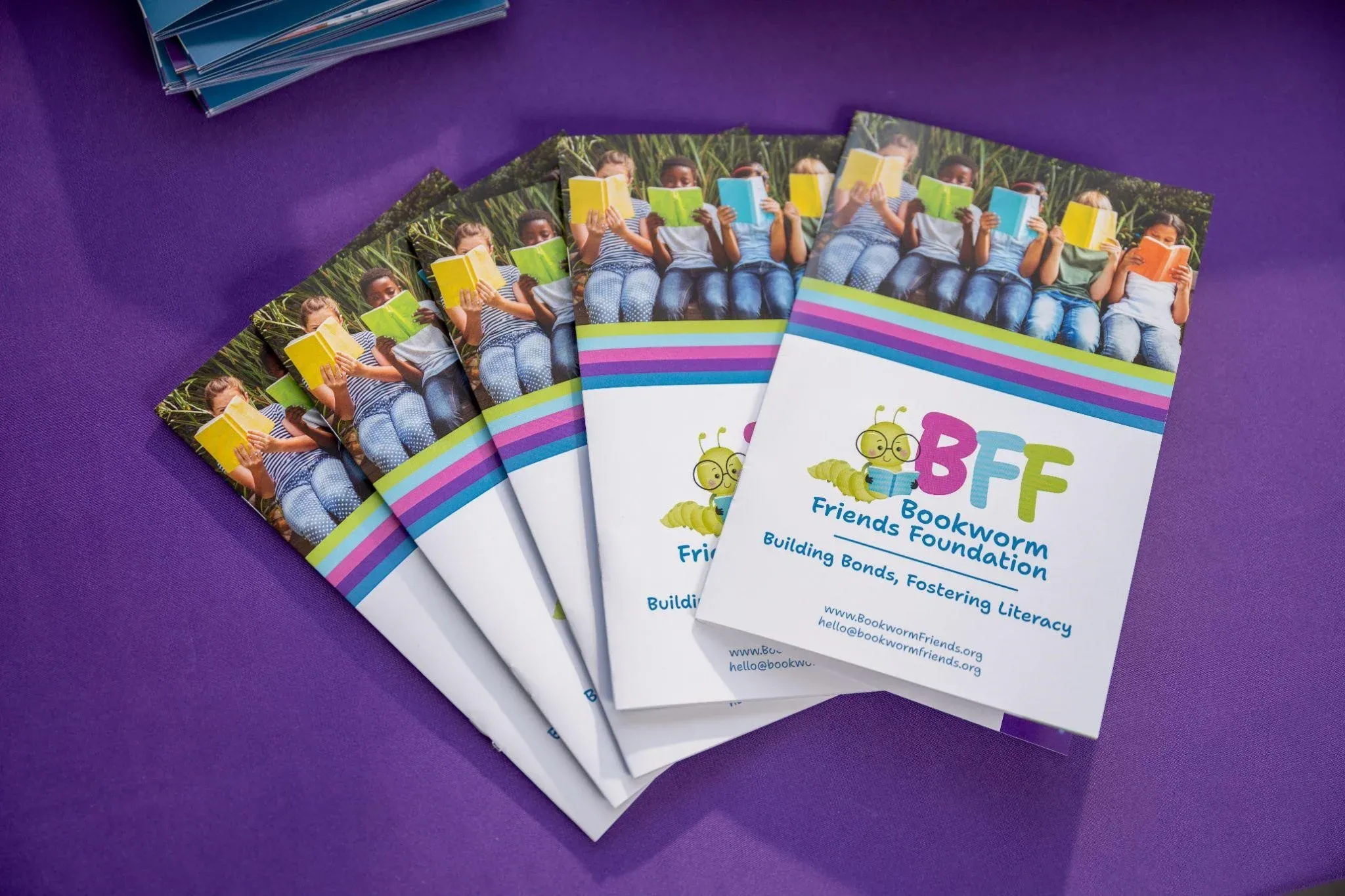
I want to settle something that B2B marketing teams constantly argue about.
One side says printed brochures are dead. Just PDFs collecting dust. The other side, usually the sales team, says they still close deals at every client meeting and trade show. I've watched this fight play out at companies of all sizes, and the frustrating truth is that both sides are asking the wrong question.
It's not print OR digital. It's print WHERE and digital WHEN.
Because B2B sales don't happen from one brochure. They happen across months of conversations, meetings, follow-ups, and internal discussions. The format you use at each of those moments either pushes the deal forward or gets ignored. Let me show you what I mean.
How B2B Deals Actually Work
You can't pick the right brochure format if you don't understand how B2B buying works. And most people get it wrong.
Research from Dreamdata covering 3.5 million buyer journeys found that the average B2B deal takes about 272 days to close. Nine months. And that deal doesn't involve one person making a decision. According to 6sense, today's B2B buying committees include around 10 people. Different departments. Different priorities. Different concerns.
Here's the kicker. About 83% of those buyers have already defined what they want before they ever talk to your sales rep. They've been researching on their own for weeks. And 95% of the time, the winning vendor was on the buyer's shortlist from day one.
So your marketing materials aren't just "nice to have." They're doing the heavy lifting long before any handshake happens.
The Case for Digital
Digital brochures have real strengths. I'm not going to pretend otherwise.
Speed is the obvious one. You can email a digital brochure to 500 prospects this afternoon. No print run, no postage, no waiting. If anything changes in your pricing or product line, update the file and redistribute it. Done. No recycling bin full of outdated tri-folds.
Tracking is the bigger deal, though. With a digital brochure, you can see who opened it, which pages they spent time on, and whether they forwarded it to a colleague. For a B2B sales team, that information is incredibly useful. It tells you what a prospect actually cares about before your next call.
For early-stage buyers who are still browsing and building their mental shortlist, a downloadable brochure on your website is perfect. Low friction. No commitment. They grab it, read it on their own time, and you've planted a seed.
But digital has a serious problem in B2B.
Your brochure lands in an inbox that already gets 100+ emails a day. It competes with every notification, every Slack ping, every open browser tab. Even when someone downloads it, the file sits in a folder they'll probably never reopen. According to Lob's 2025 consumer research, 58% of people feel overwhelmed by digital brand messages. Among high-income decision makers, that number jumps to 65%.
There's also trust. Lob found that 39% of consumers are unlikely to trust a brand that only reaches them digitally. In B2B, where purchases are expensive and careers are on the line, that trust gap matters more than most marketers admit.
The Case for Print
Print gets written off as "old school" by people who haven't looked at the data recently. So let me share some numbers that tend to surprise folks.
Direct mail averages a 4.4% response rate. Email sits at 0.12%. That's not a small gap. That's 37 times higher for physical mail. And 85% of marketers say direct mail delivers their best conversion rate across all channels, according to CompereMedia's 2024 research.
There are neuroscience studies behind this. Eye-tracking and biometric research show people process physical materials differently from what they see on a screen. They spend more time. They remember it better. The act of holding something, flipping pages, and feeling the paper weight, it engages different parts of the brain than scrolling a PDF.
But the real power of print in B2B isn't about brain science. It's simpler than that.
A printed brochure sits on a desk. It stays visible. Research shows print materials hang around in offices and homes for an average of 17 days. Emails? Their functional lifespan is roughly 17 seconds.
When your prospect's buying committee meets to discuss vendors, a printed brochure is something they can hold, flip through, and slide across the table to the CFO who missed the original meeting. That PDF buried in someone's inbox? Nobody's pulling that up for a group discussion.
And then there's the quality signal. A professionally printed brochure on good paper stock with a proper finish says something about your business. It says you invest in the details. In B2B, where buyers are spending company money and putting their reputation on the line, that kind of implied credibility can tip a decision. Cheap printing communicates cheap work. Quality print services communicate quality work. It's that direct.
Print at Trade Shows
This deserves its own section because I see companies get it wrong constantly.
You spend thousands on a trade show booth. You fly your team out. You pay for the exhibit, the signage, and the hotel rooms. And then you tell visitors, "We'll email you our brochure after the show."
That follow-up email arrives two days later when they're drowning in post-event work. It gets buried. It gets deleted. The connection you made in person evaporates.
A printed brochure, you hand someone at the booth? That goes in their bag. It travels home with them. It ends up on their desk Monday morning. Data from the ANA/DMA shows 35 to 38% of people keep printed brochures for a month or more.
If you're investing in events, bring print. This is not the place to go digital-only. Pair your booth displays with brochures that people can physically carry away, and you've extended the life of that conversation by weeks.
Print in Sales Meetings
The same logic applies when your reps visit a prospect's office or host a meeting at yours.
Your salesperson meets two people. Maybe three. But the actual buying committee has 6 to 10 members. The people your rep met need to go back to their team and make the case for your company. What are they going to share?
If you gave them a printed leave-behind, a well-designed brochure or booklet, that gets circulated. It gets placed on a conference table. It gets handed to the VP of operations or the finance director, who needs to sign off.
A follow-up email with a PDF attachment doesn't get that kind of treatment. Not even close.
When Digital Does the Job Better
I want to be balanced here because there are absolutely moments where digital is the right call.
Early-stage awareness content on your website? Digital. Downloadable guides and case studies for people who are still researching? Digital. Interactive pricing tools or ROI calculators? Definitely digital.
Post-meeting follow-up to share a video walkthrough, an expanded case study, or a detailed spec sheet? Digital makes more sense because the format benefits from links, embedded media, and real-time updates.
The point is that digital brochures work best when the buyer is alone with their screen, doing research on their own terms. Print works best when there's a human interaction involved, whether it's a meeting, an event, or a strategic mailing to a high-value prospect.
Use Both. Seriously.
A 2025 benchmark report found that 97% of marketers say combining physical mail with digital efforts improves performance. Combined campaigns have been shown to lift response rates by up to 118%.
Here's what a real combined strategy looks like.
Your website has a solid digital brochure. It captures leads when prospects download it during the research phase. Your CRM tracks that download and starts a nurture sequence. When those prospects move to active conversations, your sales team walks into meetings with printed brochures, not just a laptop with a slideshow. After trade shows and conferences, you use your direct mail services to send a quality printed piece to the people your team met in person. And you include a QR code on the printed brochure that links to the digital version for deeper content, such as video testimonials, interactive demos, or updated specs.
The digital version gives you tracking data. The printed version builds trust and sticks around the prospect's office. Each one does what it's good at.
Brochure Mistakes I Keep Seeing
The most common problem is cramming everything into one piece. Your full service list, your company history, 15 testimonials, a page about your team, and your mission statement. Nobody reads that. In B2B, a brochure should have one job. Introduce the company. Or explain a specific service. Or walk through a case study. Pick one. A brochure should open a door, not try to be the whole house.
Second problem: printing cheap. If your printed brochure feels flimsy and looks like it came out of a home printer, you've done more damage than if you'd sent nothing at all. In B2B, the physical quality of your materials directly reflects how buyers perceive your business. Work with a shop that understands professional printing and finishing, not just "good enough."
Third problem: skipping print entirely during your sales team's face-to-face conversations. If your reps meet prospects in person and leave them with nothing physical, you're wasting the highest-trust moment in your sales cycle.
Why Trust Keeps Coming Up
This word keeps appearing throughout this conversation, and there's a reason.
LinkedIn's 2025 B2B Marketing Benchmark surveyed 1,500 senior marketers and found that 94% agree trust is the key factor in B2B success. Every deal runs on it. Every relationship depends on it.
USPS research shows that 82% of millennials find print advertisements more trustworthy than digital ads. And these aren't older buyers stuck in their ways. Millennials and Gen Z now make up 71% of B2B buying committees. A 2025 Harris Poll found that 84% of younger buyers value brands that blend technology with physical, tangible experiences.
They don't want print only. They don't want digital only. They want brands that show up with intention across both. That's what signals effort. That's what builds trust. And trust is what closes B2B deals.
Design Matters More Than Format
A terrible printed brochure won't beat a great digital one. And a sloppy digital PDF won't outperform a professionally designed print piece. The format only works if the creative design behind it is solid.
A good B2B brochure design follows a few rules regardless of format. Clear visual hierarchy so the reader knows where to look first. Clean typography that doesn't fight with itself. Enough white space to let the content breathe. A single, obvious call to action. And a professional logo and brand identity that ties the brochure back to everything else your company puts out.
If you're producing both print and digital versions, they should feel connected. Same visual language, same messaging tone, same brand colors. The prospect should recognize your company instantly, whether they're holding a printed booklet at a trade show or scrolling a digital version on their laptop.
The Bottom Line
Digital brochures are faster and cheaper to distribute, and they provide tracking data that print can't match. Use them for awareness, research-stage engagement, and post-meeting content sharing.
Printed brochures build more trust, last longer, and perform better in high-touch B2B moments like meetings, events, proposals, and targeted mailings. Use them when a human interaction is involved or when you need your materials to stick around physically.
Which companies are winning the most B2B clients right now? They're not choosing sides. They use both strategically and make sure neither one is an afterthought.
Need Help With Your B2B Brochures?
At AlphaGraphics in Crystal Lake, we help B2B companies produce brochures that actually support their sales process. From brochure design and printing to direct mail campaigns and trade show materials, we handle the full picture.
Call us at (815) 681-7623 or stop by our shop at 6294 Northwest Highway (Route 14) in Crystal Lake. We'll help you figure out exactly what you need and make sure it looks the part.