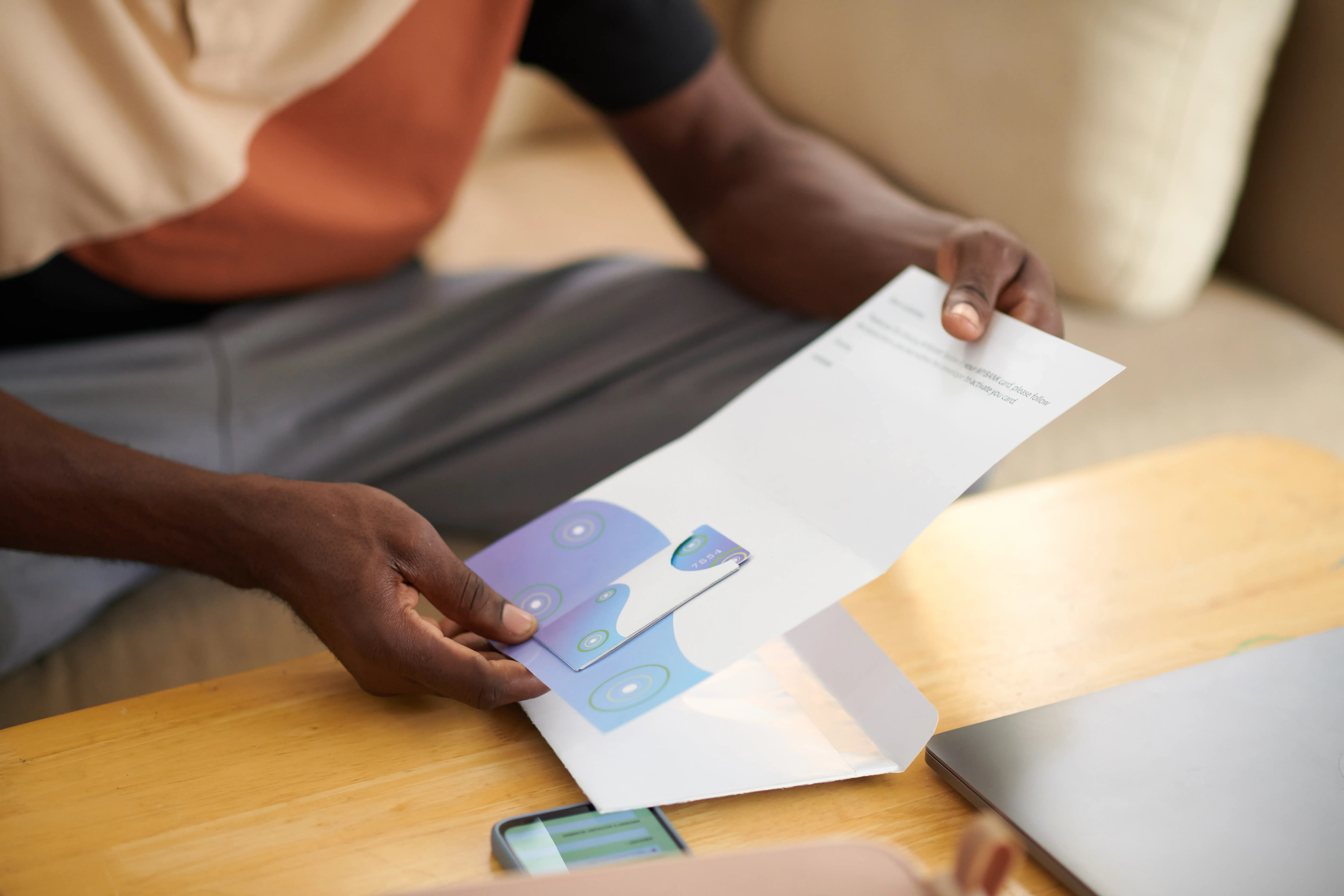
Most business owners I talk to assume direct mail is done. They tell me email is cheaper, faster, and easier. Then I show them the actual response rates, and the eyebrows go up.
Here's the short version. Direct mail averages a 4.4% response rate. Email averages 0.12%. That's roughly 36 times higher for mail. The average piece of direct mail sits in a home for 17 days. The average email gets about 17 seconds of attention before it's gone. And 84% of marketers in the latest ANA report say direct mail delivers the highest ROI among the channels they run.
That doesn't mean email is useless. It still has a place. But if you've been ignoring direct mail because someone told you it's old-fashioned, you're leaving money on the table. This post walks through why mail works, where email falls short, and when to use each one.
Email Hit a Wall
Email used to be incredible. The first time you got a marketing email, you probably opened it. Now? The average person gets around 150 emails a day. Most of them get scanned and trashed in seconds. Some never even get seen because spam filters caught them.
There's also the trust problem. Phishing scams, fake invoices, sketchy links from companies pretending to be your bank. People are wary of clicking links in emails from people they don't already know. So even if your email lands in the inbox, even if the subject line is great, the average person hesitates.
That's the wall email hit. Too much volume, too much noise, too little trust.
Mail Doesn't Have That Problem
The average household gets about 16 pieces of mail per week. That's it. Compare that to the 600+ emails the same household gets, and you can see why a piece of mail stands out. There's no spam filter. There's no inbox to bury it in. It physically arrives at the door.
And here's the part most people underestimate. You can't ignore mail the same way you ignore email. To get rid of a piece of mail, you have to pick it up, look at it, and decide. That tiny act of attention is huge. Studies show that roughly 8 out of 10 pieces of mail are opened. Compare that to the average 20-30% open rate for email campaigns, and you start to see why response rates differ so much.
What Makes Direct Mail Actually Work
It's tactile. That sounds like marketing fluff, but it's not. Holding something in your hands triggers a different kind of attention than scrolling past it on a screen. People remember mail better. There's research showing direct mail is about 49% more memorable than email and 33% more engaging.
It also feels more personal. A nicely printed postcard with your name on it lands differently than a templated email. Even when both are technically personalized, the mail feels like someone took the time to do it. The email feels like it was sent by a robot (because, usually, a robot did).
And mail builds trust the same way a good business card does. It says you're a real company. You spent real money. You're not some random sender hoping the spam filter doesn't catch you. That credibility is hard to fake and hard to copy.
The Real Reasons Direct Mail Wins
Let me walk through the specific advantages, because "it just feels better" won't convince a marketing director.
People Actually See It
Open rates for direct mail run 80 to 90%. Email open rates sit at 20 to 30% on a good day. If half your problem is just getting eyeballs on the message, mail solves that problem before you even start designing the piece.
It Sticks Around
Mail has a shelf life. A good brochure or oversized postcard ends up on the kitchen counter, pinned to the fridge, tossed in a junk drawer, or kept in the car. The average piece is in the home for 17 days. That's 17 days of someone walking past your offer, your phone number, your QR code. Email gets a few seconds, maybe a minute if you're lucky.
It Builds Trust
73% of American consumers prefer brands to contact them via direct mail over digital channels. There's something about a piece of mail that feels less invasive than yet another email or push notification. People associate mail with real businesses, official communication, and things that matter. Email has lost a lot of that.
It's Easier to Target Geographically
This is huge for local businesses. With Every Door Direct Mail or a targeted carrier route mailing, you can reach every household in a specific zip code or neighborhood. You don't need an email list. You don't need consent. You just pick the area you want to reach, and the mail goes there. Email can't really do that the same way.
The Response Rate Justifies the Cost
Yes, mail costs more per piece. A standard postcard runs roughly 40 to 60 cents fully delivered, depending on size and quantity. Email costs basically nothing per send. But response rate is what actually matters. Send 1,000 emails at 0.12% response rate, and you get 1 response. Send 1,000 postcards at a 4.4% response rate, and you get 44. Even at 50 cents a piece, that's $500 to get 44 leads, or about $11 per response. Most email campaigns can't touch that on a cost-per-acquired-lead basis.
It Pairs Well With Digital
This is the part most people miss. Direct mail isn't either-or with digital marketing. The two together work better than either alone. Add a QR code to a postcard to bridge the physical and digital. Send mail before an email follow-up, and the email open rate goes up because the recipient already knows your name. Marketers who run integrated campaigns see response rates rise by over 100% compared to single-channel digital.
So if you're already running email campaigns, adding direct mail and fulfillment doesn't replace what you're doing. It makes the whole thing work better.
When Email Still Wins
I'm not going to pretend email is bad. Here's where it actually beats direct mail.
Speed. If you need to send something today, please email it. Mail takes days to print and deliver.
Cost per send. Email is basically free at scale. If you have a list of 50,000 people and you want to send them a quick update, email is fine.
Transactional messages. Order confirmations, shipping notifications, and password resets. Nobody wants those in the mail.
Ongoing nurture. If someone is already a customer and you want to send them weekly or monthly tips, email is the right tool. Mailing them every week would be expensive and probably annoying.
Pure B2B with established email contacts. If you're emailing a procurement contact you've already met, you don't need to mail them a postcard.
The smart play isn't to pick one. It's to use mail for the moments that matter most (acquiring new customers, big offers, reactivating old ones) and email for the rest.
How to Actually Run a Direct Mail Campaign
Three things make or break a mail campaign. List, offer, design. In that order.
The list matters more than anything else. A great offer mailed to the wrong people gets ignored. A mediocre offer mailed to the right people still gets responses. House lists (your existing customers) consistently pull 5 to 9% response rates. Cold prospect lists pull 2 to 4%. If you have customer data, use it first.
The offer has to give people a reason to act. "Stop by our store" isn't an offer. "20% off your first service if you call by the end of the month" is. Make it specific, time-limited, and easy to redeem.
The design has to be clean and easy to read at a glance. Don't try to fit everything you do onto one postcard. One headline, one offer, one call to action, one phone number or QR code. If someone has to study it for 30 seconds to figure out what you're selling, they won't.
Direct Mail Formats Worth Knowing
Quick rundown of what you can actually mail.
Postcards are the most common format and usually the cheapest. Good for sales, promos, grand openings, "we miss you" reactivations. They get read because there's no envelope to open. The headline does the work.
Letters in envelopes feel more personal and work well for higher-value offers, financial services, fundraising appeals, and B2B. Open rates are slightly lower than postcards because the envelope is a barrier, but the people who do open them tend to read more carefully.
Brochures and self-mailers are good for service businesses that need to explain what they do. A well-designed tri-fold brochure gives you room to tell a story, show before-and-after photos, list services, and include a coupon all in one piece.
Dimensional mailers are envelopes with something tangible inside (a sample, a magnet, a small product). Expensive per piece, but they get nearly 100% open rates. Worth it for high-value B2B prospects.
Every Door Direct Mail (EDDM) lets you blanket a zip code or carrier route without needing a list of names. Cheap, fast, and great for local restaurants, services, real estate, and anyone whose customer base is geographic.
Tracking and ROI
People say, "You can't track direct mail." That hasn't been true for years. A few simple ways to track what's working.
QR codes that go to a unique landing page tell you exactly how many people scanned the piece.
Unique phone numbers (call tracking numbers) tell you how many calls came from the mail.
Promo codes tied to the campaign show up in your sales data.
Personalized URLs (PURLs) take it a step further by giving every recipient their own landing page.
Set up tracking before the mail drops. Otherwise, you'll be guessing for weeks about whether it worked.
Frequently Asked Questions
Is direct mail more expensive than email?
Per piece, yes. A postcard might cost 40 to 70 cents to print and mail, while an email costs almost nothing per send. But cost per response or cost per acquired customer is what actually matters. Direct mail's higher response rate often makes the cost per lead competitive with or better than email, especially for new customer acquisition.
What's the average response rate for direct mail in 2025?
Around 4.4% across all industries, based on the latest ANA/DMA Response Rate Report. House lists (existing customers or warm leads) average 5-9%. Cold prospect lists average 2-4%. Email's average response rate is 0.12%, which makes mail roughly 36 times more responsive on a per-piece basis.
Should I replace email marketing with direct mail?
No. Use both. Mail is best for big moments like acquiring new customers, reactivating old ones, launching a product, or making a high-value offer. Email is best for follow-up, ongoing nurture, transactional messages, and quick announcements. The two together elicit a stronger response than either one alone. Marketers who integrate both report response lifts of over 100%.
What kinds of businesses get the best results from direct mail?
Local services (home services, restaurants, dental, healthcare), retail with a physical location, real estate, financial services, nonprofits, and B2B for high-value targets. Pretty much any business where the customer makes a considered decision and trust matters. If you sell a $5 impulse product to a global audience, email or paid social is probably better.
How long does a direct mail campaign take to set up?
Two to four weeks is typical. Design takes a few days. Printing takes a few more. Then USPS delivery takes a few more days. If you're running EDDM, add time to coordinate routes. If you have a list to clean and segment, add time for that too. Plan ahead, and you avoid scrambling. Working with a full-service mail and fulfillment partner usually shaves a week off because they handle printing, addressing, sorting, and dropping off at the post office in one workflow.
How do I track results from a mailed campaign?
Use unique QR codes, dedicated phone numbers, promo codes, or personalized landing page URLs. Each one ties responses back to the specific mailing. Track responses for at least four to six weeks after the drop, because mail keeps generating leads for weeks (unlike email, where most opens happen in the first 24 hours).
What are the main advantages of direct mail advertising?
The biggest advantages of direct mail advertising are higher response rates (around 4.4% vs 0.12% for email), better open rates (80 to 90% vs 20 to 30%), longer shelf life (the average piece sits in a home for 17 days), and stronger trust. Mail also lets you target by neighborhood or zip code without needing an email list, which is huge for local businesses. And because most companies have shifted to digital, mail stands out more than it used to.
Direct mail vs email marketing: which one actually works better?
For new customer acquisition and high-value offers, direct mail wins. The numbers are not close. Mail averages 36 times the response rate of email per piece, gets opened 3 to 4 times more often, and stays in front of the recipient for weeks instead of seconds. Email wins on speed, cost per send, and ongoing nurture (order confirmations, weekly updates, customer follow-ups). Most businesses get the best results using both. Mail to acquire and reactivate customers, email to nurture and inform.
What are the benefits of direct mail over digital marketing?
Direct mail beats digital marketing in a few specific ways. There's no spam filter blocking it. There's no ad blocker hiding it. People can't scroll past it the way they scroll past social ads. It's tactile, which makes it 49% more memorable than digital ads according to most studies. It builds trust because people associate physical mail with real, established businesses. And it's not affected by algorithm changes or rising ad costs that can wipe out a digital campaign overnight.
Need Help With a Direct Mail Campaign?
AlphaGraphics Crystal Lake has been helping businesses run smart, profitable direct mail campaigns for years. We handle the whole thing under one roof. Strategy, design, printing, list cleaning, addressing, postal sorting, and the actual drop at the post office. You don't have to coordinate three vendors and hope it all works.
If you've never run mail before, we'll walk you through the options. If you've run mail and it didn't perform, we'll figure out what went wrong (it's usually the list or the offer) and fix it. We work with local businesses across McHenry County and the Chicago suburbs, and we serve clients running campaigns nationwide, too.
Want to talk through a campaign? Visit AlphaGraphics Crystal Lake at 6294 Northwest Hwy (Rt 14), Crystal Lake, IL 60014, or contact us via the contact page for a quote.