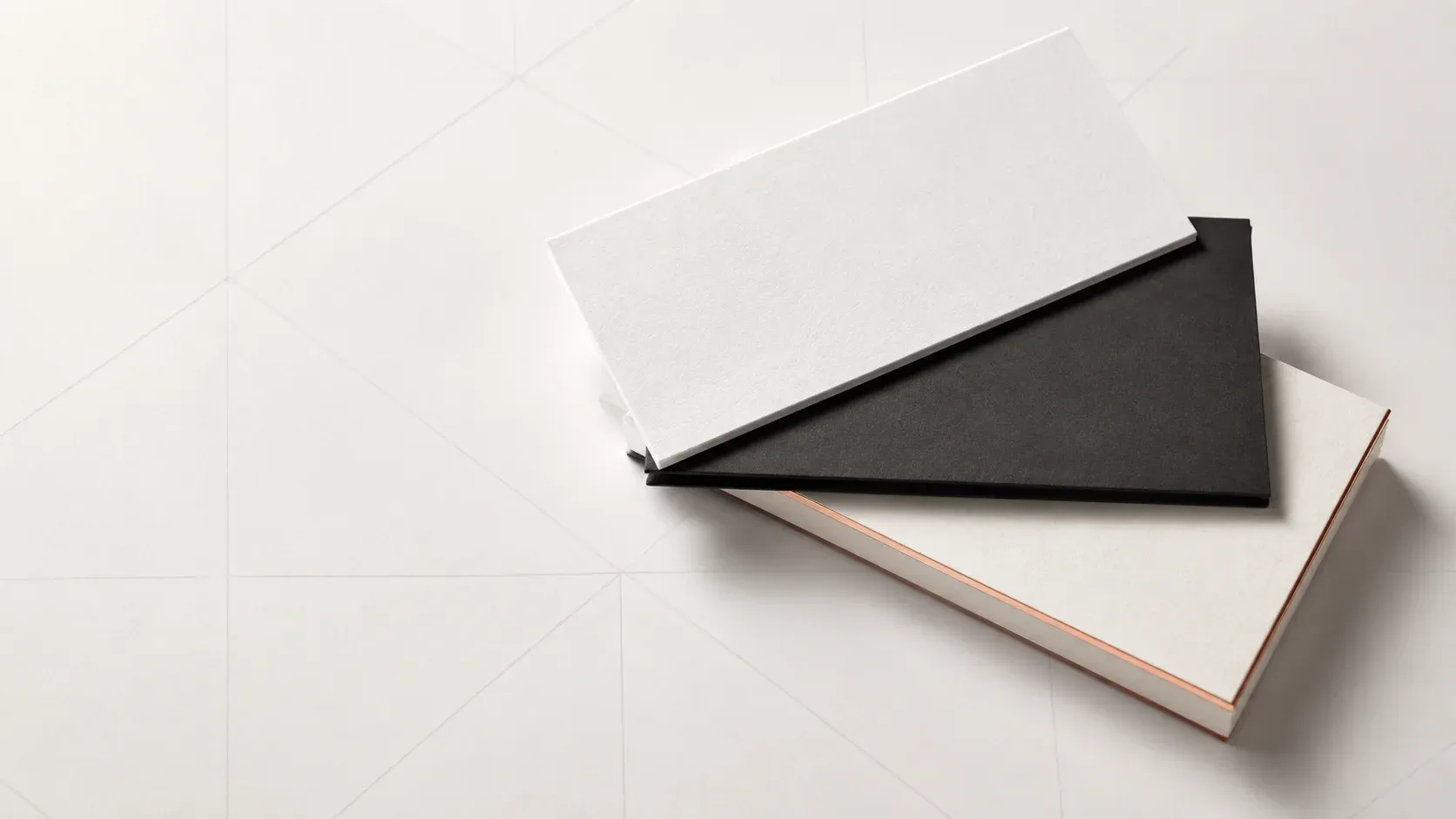
As a general planning range, 500 business cards can cost approximately $25 to $500 or more. The low end usually represents a standard-size card on basic stock with a print-ready file and limited customization. The high end may include extra-thick or specialty paper, foil, spot gloss, embossing, painted edges, custom shapes, or professional design work.
That range is intentionally broad because two orders for “500 business cards” may be completely different products. Quantity matters, but paper, finishing, printing method, design support, turnaround, and delivery can change the price just as much.
The estimates below reflect publicly advertised U.S. market pricing reviewed in August 2026. They are budgeting ranges, not a quote from AlphaGraphics Crystal Lake. For an exact price, submit the quantity and specifications through our business card printing quote form.
Business Card Prices at a Glance
For 500 standard-size cards, a useful starting framework is:
|
Type of Business Card
|
Estimated Price for 500
|
What It Commonly Includes
|
|
Basic or value
|
$25 to $100
|
Standard stock, standard size, no specialty effects, customer-supplied print-ready artwork
|
|
Premium
|
$100 to $250
|
Heavier or specialty stock, upgraded coating, rounded corners, multiple printed sides, or some design and prepress support
|
|
Specialty or luxury
|
$200 to $500+
|
Foil, spot gloss, embossing, multilayer stock, painted edges, letterpress, custom shape, or multiple specialty processes
|
Actual pricing can fall outside these ranges. Promotional pricing may be lower, while complex custom cards, short deadlines, multiple employee versions, and extensive design work can cost more.
What Determines the Cost of Business Cards?
The main pricing factors are:
-
Quantity: Larger orders usually cost more in total but less per card.
-
Paper stock: Thickness, coating, texture, color, and material all affect cost.
-
Single-sided or double-sided printing: Using the back may add production or design cost, depending on the process.
-
Finish: Soft-touch coating, foil, spot gloss, embossing, and painted edges require additional materials or production steps.
-
Printing method: Digital, offset, letterpress, and specialty processes have different setup and run costs.
-
Design and file preparation: A print-ready PDF costs less to produce than a card that needs design, logo cleanup, typesetting, or file repair.
-
Turnaround and delivery: Rush production, shipping, and local delivery may affect the final total.
-
Number of versions: Printing cards for several employees can involve separate files, proofs, quantities, and finishing setups.
When comparing prices, make sure every quote includes the same specifications. A $40 order and a $140 order may not be comparable if the paper, finish, proofing, turnaround, or design support differs.
Business Card Cost by Quantity
Setup, file preparation, proofing, cutting, and finishing are part of the production cost. As quantity increases, those costs are distributed across more cards, which generally lowers the cost per card.
|
Quantity
|
Standard Cards
|
Premium Cards
|
Specialty or Luxury Cards
|
|
100
|
$15 to $50
|
$40 to $100
|
$75 to $200+
|
|
250
|
$20 to $75
|
$60 to $175
|
$125 to $350+
|
|
500
|
$25 to $100
|
$100 to $250
|
$200 to $500+
|
|
1,000
|
$40 to $175
|
$150 to $400
|
$350 to $800+
|
These estimates generally assume a standard 3.5-by-2-inch card. Design, shipping, taxes, rush service, and unusual production requirements may not be included.
How Many Business Cards Should You Order?
There is no universal “best” quantity. The right amount depends on how quickly you distribute cards and how often your information changes.
A simple calculation is:
Expected cards used each month × months before the next reorder + 10% to 15% buffer
For example, if you use about 25 cards each month and want a one-year supply, you need approximately 300 cards plus a buffer. In that case, a 500-card quantity may offer better unit pricing without creating excessive waste.
Consider starting with 100 or 250 cards if you recently changed your logo, title, phone number, address, or website. Order more when your information is stable, and you regularly attend meetings, networking events, sales calls, or trade shows. If an event is driving the order, our guide to common Crystal Lake trade show printing mistakes can help you plan the rest of your printed materials at the same time.
How Paper Stock Affects Business Card Pricing
Business card thickness is often measured in points, written as “pt.” One point equals one-thousandth of an inch, so a 16pt card is nominally about 0.016 inches thick. Point thickness doesn't tell the whole story, however. Two papers with the same stated thickness can feel different because of their fiber, coating, density, texture, and construction.
14pt Cardstock
Fourteen-point cardstock is a common, economical choice for standard business cards. It offers enough rigidity for routine use while keeping production costs manageable. Matte, gloss, and uncoated options may be available.
16pt Cardstock
Sixteen-point cardstock feels more substantial and is a popular professional upgrade. It works well for businesses that want a sturdier card without moving into an extra-thick or multilayer product.
18pt to 32pt and Multilayer Stocks
Cards in this range make a stronger tactile statement. They may use a single heavy sheet or multiple bonded layers, sometimes with a contrasting color visible at the edge. Material cost, specialized equipment, and additional production steps make these options more expensive.
Uncoated, Recycled, Linen, Cotton, and Textured Papers
Specialty papers can communicate a particular brand personality. Uncoated stock feels natural and is usually easier to write on. Linen adds a woven texture. Cotton can feel soft and refined. Recycled and kraft-style papers create a different visual and tactile effect, but they may reproduce colors differently than bright white coated stock.
Synthetic, Plastic, Magnetic, and Metallic Materials
These materials are chosen for durability or a specific use, not price alone. They often require different printing, cutting, or finishing processes and should be quoted as separate products.
AlphaGraphics Crystal Lake offers standard and heavy stocks, coated papers, metallic options, plastic, magnetic cards, multilayer cards, and other custom business card materials and styles. Comparing actual samples is the best way to judge whether an upgrade is worth the cost.
How Business Card Finishes Affect Cost
Finishes can protect the card, change how color appears, add texture, or draw attention to a specific element. Cost depends on quantity, stock, coverage, number of sides, and production method.
|
Finish
|
Appearance and Use
|
Typical Cost Impact
|
|
Uncoated
|
Natural, writable surface
|
Low to moderate
|
|
Matte coating
|
Smooth, low-glare appearance
|
Low
|
|
Gloss or gloss UV
|
Shiny surface with stronger color and contrast
|
Low to moderate
|
|
Soft-touch coating
|
Velvety, low-glare texture
|
Moderate
|
|
Rounded corners
|
Softens the shape and changes the card's feel
|
Low to moderate
|
|
Spot gloss or spot UV
|
Glossy emphasis on selected elements, often over a matte background
|
Moderate to high
|
|
Foil stamping
|
Metallic or pigmented foil applied to selected areas
|
High
|
|
Embossing or debossing
|
Raised or recessed impression in the paper
|
High
|
|
Painted or colored edges
|
Color applied to the edge of a thick card
|
High
|
|
Die-cut shape
|
Custom outline or cutout
|
High
|
|
Multilayer, letterpress, plastic, or magnetic construction
|
Specialty material or production method
|
High; custom quote recommended
|
Combining finishes creates additional setups. A soft-touch card with spot gloss and foil, for example, costs more than choosing one of those effects alone. The best value is often one purposeful upgrade that supports the design, rather than several effects competing for attention.
Does Double-Sided Printing Cost More?
It can, but the increase is not always dramatic. Some digital products include full-color printing on both sides, while other products price the second side separately. Traditional and specialty processes may require another plate, pass, setup, or finishing step.
The back of a business card can be useful for:
-
A short list of services
-
Appointment information
-
A memorable brand message
-
Social media handles
-
A map or location detail
-
A QR code leading to a portfolio, booking page, digital contact card, or special offer
Adding a standard printed QR code usually does not require a specialty finish, but it does need enough size, contrast, quiet space, and testing to scan reliably. AlphaGraphics Crystal Lake can also help you plan how to use QR codes in print marketing.
Does Full-Color Printing Cost More?
For many modern digital products, full-color printing is the standard, so the amount of color in the design may not change the base price. Costs can increase when a project requires exact spot colors, metallic inks, white ink, color-critical proofing, or another specialized production process.
If matching a brand color matters, say so when requesting a quote. A screen preview isn't a reliable guarantee of printed color because monitors display RGB light, while commercial printing commonly uses CMYK inks or toner.
How the Printing Method Changes the Price
Digital Printing
Digital printing has relatively low setup costs, making it well suited to shorter runs, fast turnarounds, and multiple employee versions. It is a common choice for quantities from a few dozen to several hundred cards.
Offset Printing
Offset printing requires more setup, but the per-card cost can become attractive at larger quantities. You may also choose it when a project requires a specific paper, spot color, or production characteristic.
Letterpress and Specialty Processes
Letterpress, foil stamping, embossing, edge painting, and custom die cutting involve specialized setups and more hands-on production. The quantity matters, but much of the price comes from the process itself.
Design and File Preparation Costs
Printing and design are separate parts of the job. If you provide a correct, print-ready file, the quote may only need to cover production. Design cost may be added when the card requires:
-
A new layout
-
Logo cleanup or vector conversion
-
Font replacement or typesetting
-
Brand-color correction
-
Multiple employee versions
-
QR code creation and testing
-
Rebuilding a low-resolution or incorrectly sized file
-
Revisions after the proof is issued
A typical print-ready business card file should use the printer's exact template, include bleed when color or images extend to the edge, keep important content inside the safe area, and use high-resolution or vector artwork. Ask the printer for its specifications before finalizing the file rather than assuming every provider uses the same requirements.
If you need help creating the card, AlphaGraphics Crystal Lake offers professional creative and prepress services. If the larger issue is an inconsistent logo, color palette, or visual system, it may be worth reviewing your branding and identity before printing new materials.
Other Costs That May Appear in a Business Card Quote
A low advertised price doesn't always reflect the final delivered cost. Check whether the quote includes:
-
Graphic design or file repair
-
Digital or physical proofing
-
Printing on one side or both sides
-
Coating on one side or both sides
-
Separate employee names or card versions
-
Specialty setup charges
-
Rounded corners or custom cutting
-
Rush production
-
Shipping or local delivery
-
Sales tax
-
Packaging or distribution to multiple locations
Ask for an itemized quote when comparing options. It is much easier to understand a price difference when you can see which services and specifications are included.
Online Printer vs. Local Print Shop
Online and local printing can both be appropriate. The better option depends on how standard the order is and how much guidance, customization, or deadline support you need.
|
Factor
|
Online Printer
|
Local Print Partner
|
|
Pricing
|
Often displays instant prices for preset products
|
Usually provides a quote based on the exact specifications
|
|
Product selection
|
Limited to the options available in the online menu
|
Can discuss custom stocks, processes, sizes, and combinations
|
|
Paper evaluation
|
Sample packs may be ordered
|
Samples may be available to compare in person
|
|
Design support
|
Templates, automated checks, or remote support
|
Direct conversation with design and production staff
|
|
Proofing
|
Usually a digital proof or automated preview
|
Can discuss digital, physical, or press-proof options when appropriate
|
|
Turnaround
|
Depends on production schedule and shipping
|
May offer local pickup and direct deadline coordination
|
|
Problem solving
|
Often handled through centralized customer service
|
Local team can inspect files and discuss practical alternatives
|
An online printer can be a reasonable choice for a straightforward card when the artwork is ready, the product is standardized, and shipping time is flexible. A local print partner becomes more valuable when the card is brand-critical, you need to compare paper and finishes in person, the file needs help, the deadline matters, or the project includes several versions.
How to Reduce Business Card Cost Without Making the Card Feel Cheap
Choose the Right Quantity
Order enough to reach a useful price break, but not so many that a future title, phone number, address, or branding change will make the cards obsolete.
Keep the Standard Size
The standard U.S. size is 3.5 by 2 inches. A custom size isn't automatically expensive, but unusual shapes and dimensions can create more waste, require special cutting, or add unique packaging requirements.
Start With a Strong 14pt or 16pt Stock
A well-designed standard card on a suitable stock can look more professional than a poorly designed card with several expensive finishes.
Select One Meaningful Upgrade
Choose the feature that best supports the brand. That might be soft-touch coating for a refined feel, spot gloss to highlight a logo, or foil for a luxury service. One deliberate effect often has more impact than several unrelated ones.
Finalize the Information Before Printing
Check every phone number, email address, URL, title, license number, and QR code before approving the proof. Reprinting because of an avoidable error costs more than careful proofreading. For a more complete checklist, read Common Business Card Printing Mistakes and How to Avoid Them.
Avoid Rush Production When Possible
Specialty finishes require time. Starting early gives you more choices and reduces the chance that a rush fee or limited production method will determine the final product.
What Information Should You Provide for an Accurate Quote?
The fastest way to receive an accurate business card price is to specify:
-
Finished size
-
Quantity
-
Number of employee names or versions
-
Paper stock or desired thickness
-
Single-sided or double-sided printing
-
Color requirements
-
Coating or specialty finish
-
Square or rounded corners
-
Whether the file is print-ready
-
Whether design support is needed
-
Desired completion date
-
Pickup, shipping, or delivery needs
If you are unsure about the paper or finish, describe the impression you want the card to make and the budget range you want to stay within. A print specialist can recommend options that achieve the goal without adding unnecessary production cost.
Are Business Cards Still Worth It in 2026?
Yes, when your business involves face-to-face conversations. A business card creates a physical reminder of the meeting and gives the recipient an easy way to reconnect. It can also connect print to digital tools through a QR code or short URL.
A useful card should do three things:
-
Identify you and your business immediately.
-
Make the next step clear.
-
Look and feel consistent with the rest of your brand.
The goal is not to buy the most expensive card. It is to choose a card that communicates the right level of credibility and gives people a reason to keep or use it.
Frequently Asked Questions
How much do 500 business cards cost?
Five hundred business cards can range from approximately $25 to $100 for a basic product, $100 to $250 for many premium options, and $200 to $500 or more for specialty cards. Exact pricing depends on stock, printed sides, finishes, design, turnaround, shipping, and the number of versions.
How much does one business card cost?
The unit cost can range from a few cents for a basic high-volume card to $1 or more for a short-run specialty card. Unit price generally decreases as quantity increases, but specialty processes can keep the cost higher.
What is the standard business card size?
The standard U.S. business card size is 3.5 inches wide by 2 inches high. Vertical cards use the same dimensions in the opposite orientation. Square, slim, folded, oversized, and custom die-cut cards are also available.
Is 14pt or 16pt better for business cards?
Fourteen-point stock is a practical standard option. Sixteen-point stock feels more substantial and is a common upgrade. The best choice depends on the specific paper, coating, design, and brand rather than thickness alone.
Does printing on both sides cost more?
Sometimes. Certain products include double-sided full-color printing, while others charge for the second side. Specialty processes can require an additional setup or production pass. Compare the exact specifications rather than assuming every printer prices the second side the same way.
How much does business card design cost?
Design pricing depends on whether you need a simple layout, several employee versions, logo work, brand development, custom illustration, or extensive revisions. Ask whether the printing quote includes design and prepress.
Do foil, spot UV, or embossed business cards cost more?
Yes. These finishes require extra materials, equipment, and setup. Combining several specialty finishes increases cost further. A custom quote is the most reliable way to compare these options.
Is it cheaper to print business cards online or locally?
Online pricing is often lower for a standardized product with print-ready artwork. A local printer may provide greater value when you need samples, design help, custom production, file review, local pickup, or direct deadline coordination.
Get a Business Card Quote in Crystal Lake, Illinois
AlphaGraphics Crystal Lake can help you compare paper stocks, finishes, quantities, and design options before you commit to an order. We produce standard and specialty business cards for individual professionals, growing teams, local businesses, and organizations throughout Crystal Lake and the surrounding area.
Visit us at 6294 Northwest Highway (Route 14), Crystal Lake, IL 60014, call (815) 444-9971, or request a business card printing quote. Include your quantity, paper preference, printed sides, finish, number of versions, and deadline for the most accurate estimate.