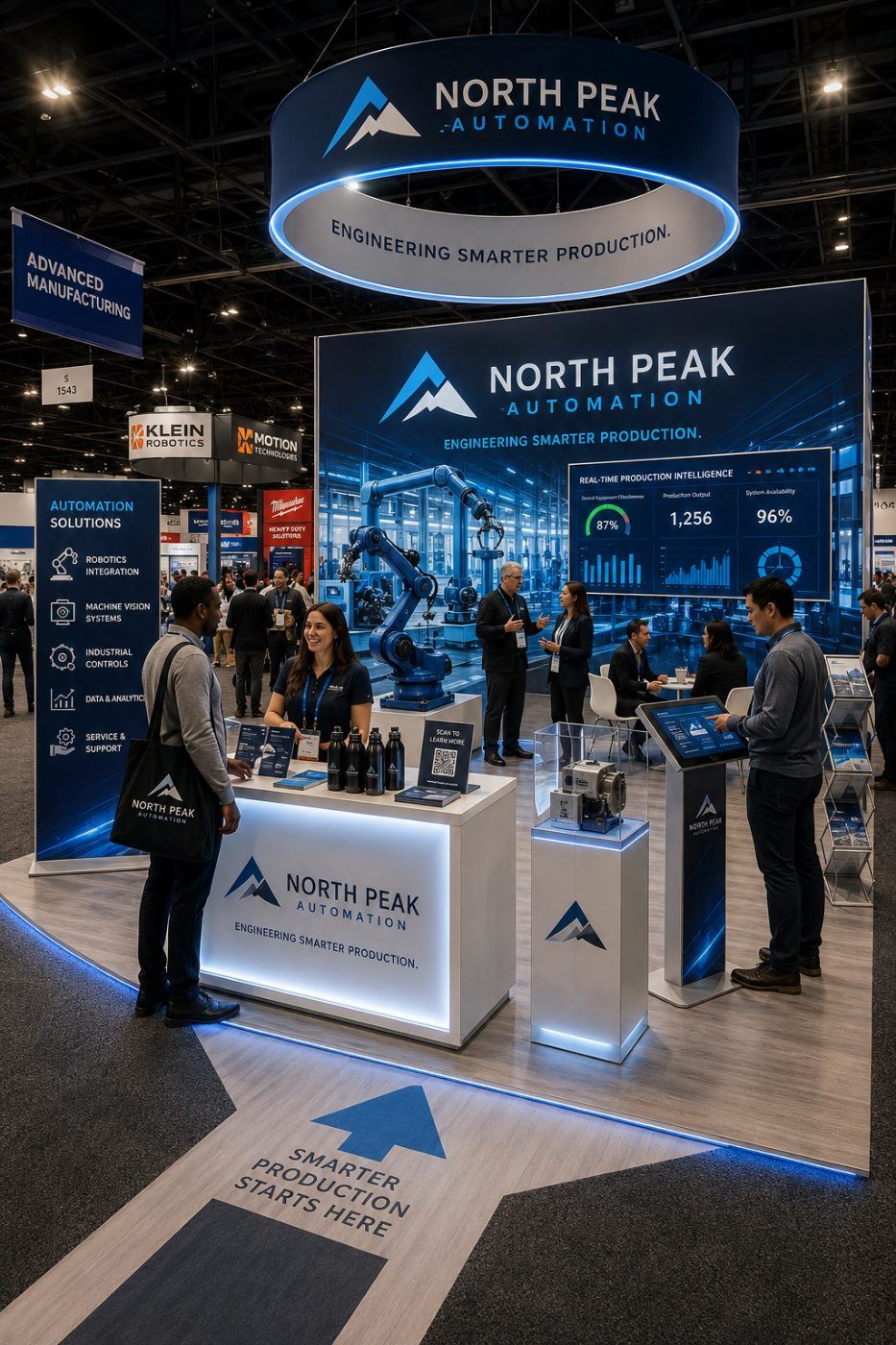
Yes — the room is full of people who can say yes. Roughly four out of five attendees on that floor have buying authority — 81%, per the Center for Exhibition Industry Research. The way to cash that in is order of operations: decide who follows up, how fast, and with what offer before you order a single graphic, then build the booth around that plan. It works because somebody else already gathered your buyers, checked their badges, and pointed them down your aisle.
Somebody else assembled your buyers
Most marketing spends money to find decision-makers. A trade show is one of the few channels where somebody else has already assembled them, checked their badges, and pointed them down an aisle toward you. That's a hit rate a cold email list never comes close to.
"Worth it" is a math question
CEIR's research on exhibition cost-effectiveness put a price on the handshake. Meeting a prospect at a show costs about $96. Finding and meeting that same prospect in the field — cold calls, sales visits, outbound — runs about $1,039.
That works out to roughly $943 saved on every prospect. You're not paying to close anyone at a show; you're paying to meet them, and meeting them any other way costs about ten times more.
The advantage carries into the sales cycle. It takes an average of 3.5 sales calls to close a lead from a show, against 4.5 from anywhere else, so the handshake shaves nearly a full call off the process.
What actually pulls people into a booth
Three pieces do most of the work, and none of them is exotic.
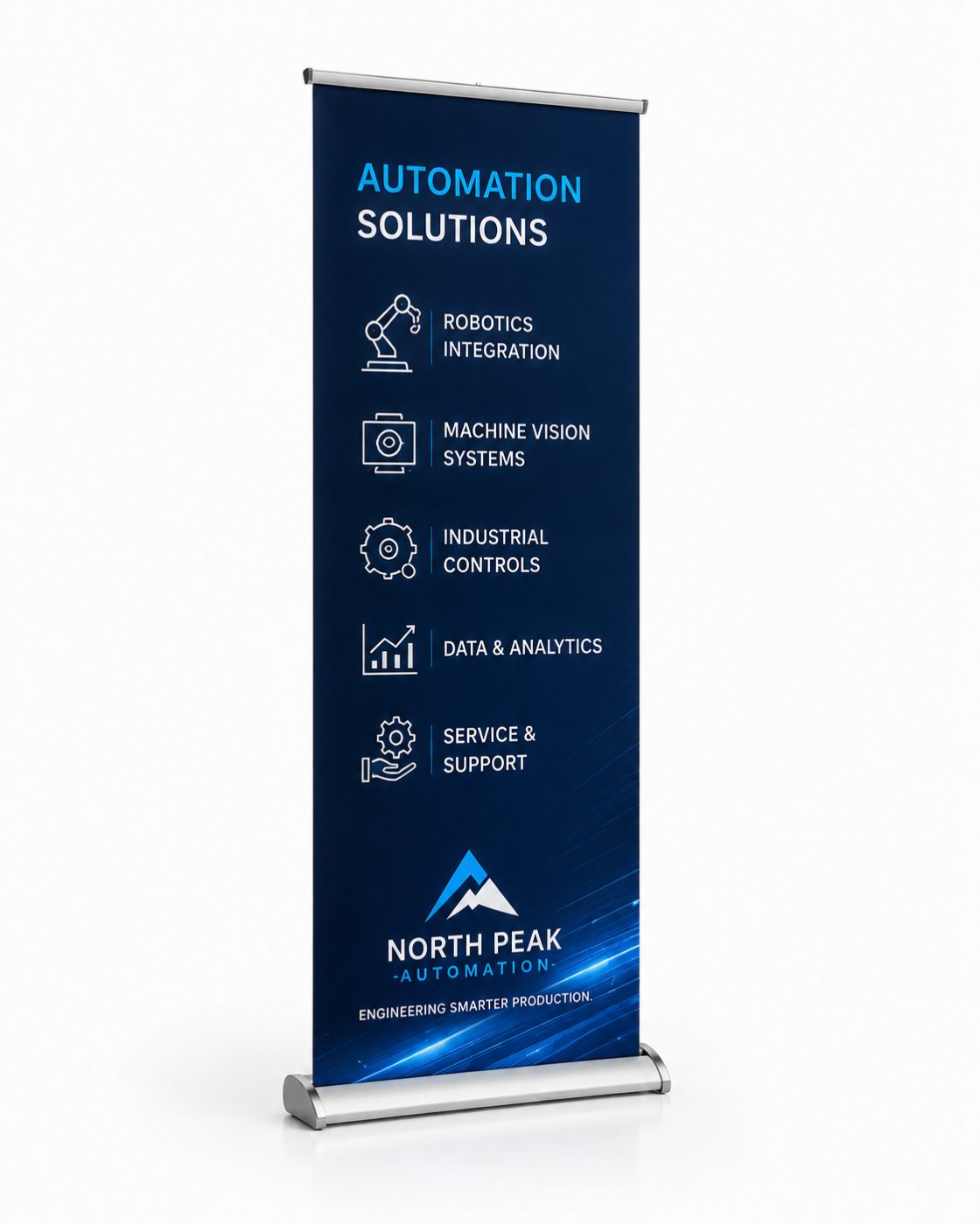
The retractable banner — the foundation. It rolls into its own case and sets up in under a minute. It's the most affordable to buy and the easiest to travel with, and it works just as well in a booth, a lobby, a registration table, or a sponsor wall. If you're doing one or two shows a year, this is very often the smart place to start and to stop. Nobody needs to talk you into more.
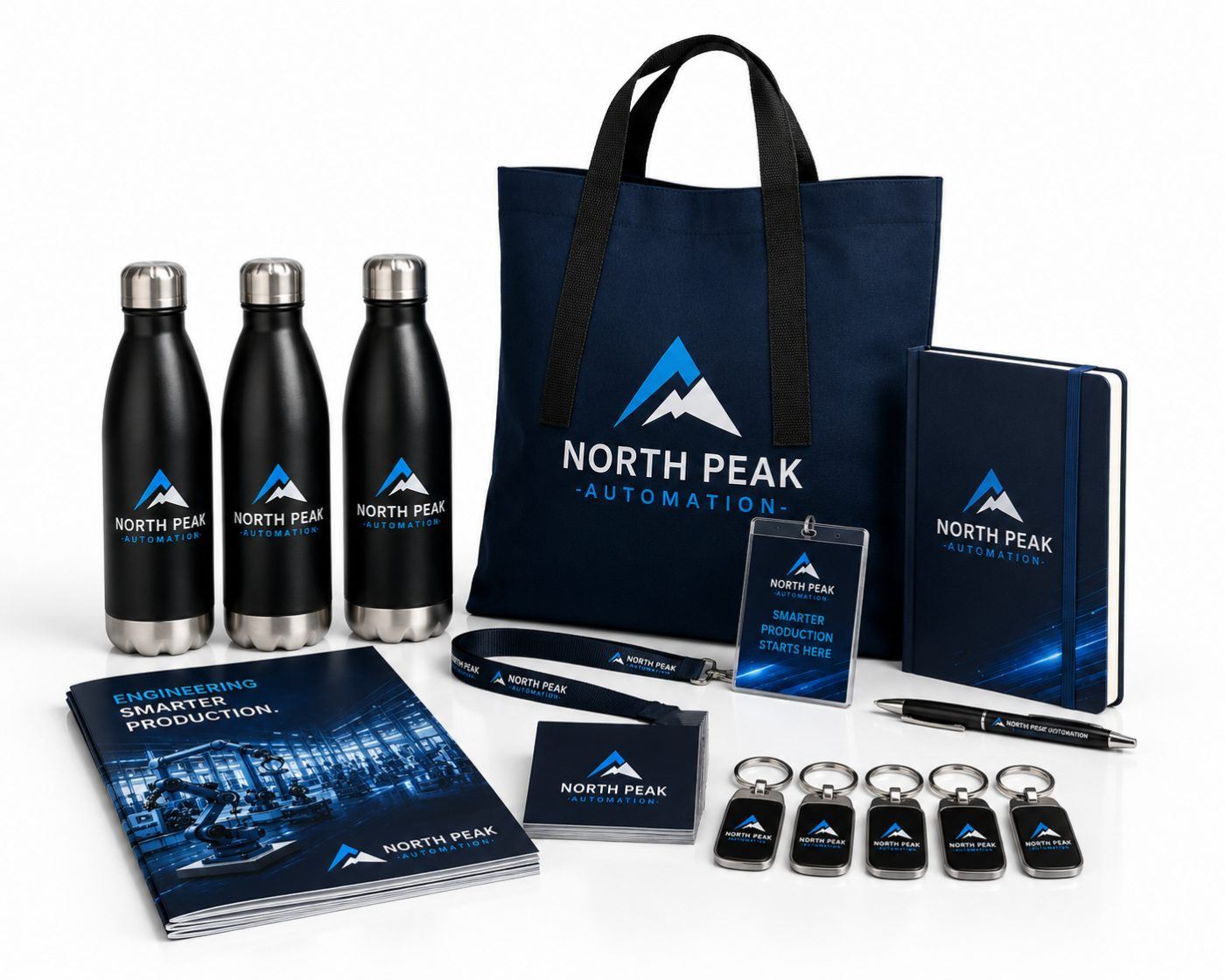
Branded merch — the piece that leaves with them. A bottle, a tote, a pen. What matters isn't the giveaway but whether the recipient chooses to keep it. Useful items become months of impressions on somebody's desk, while forgettable ones cost the same and do nothing. Pick for utility, not unit price.
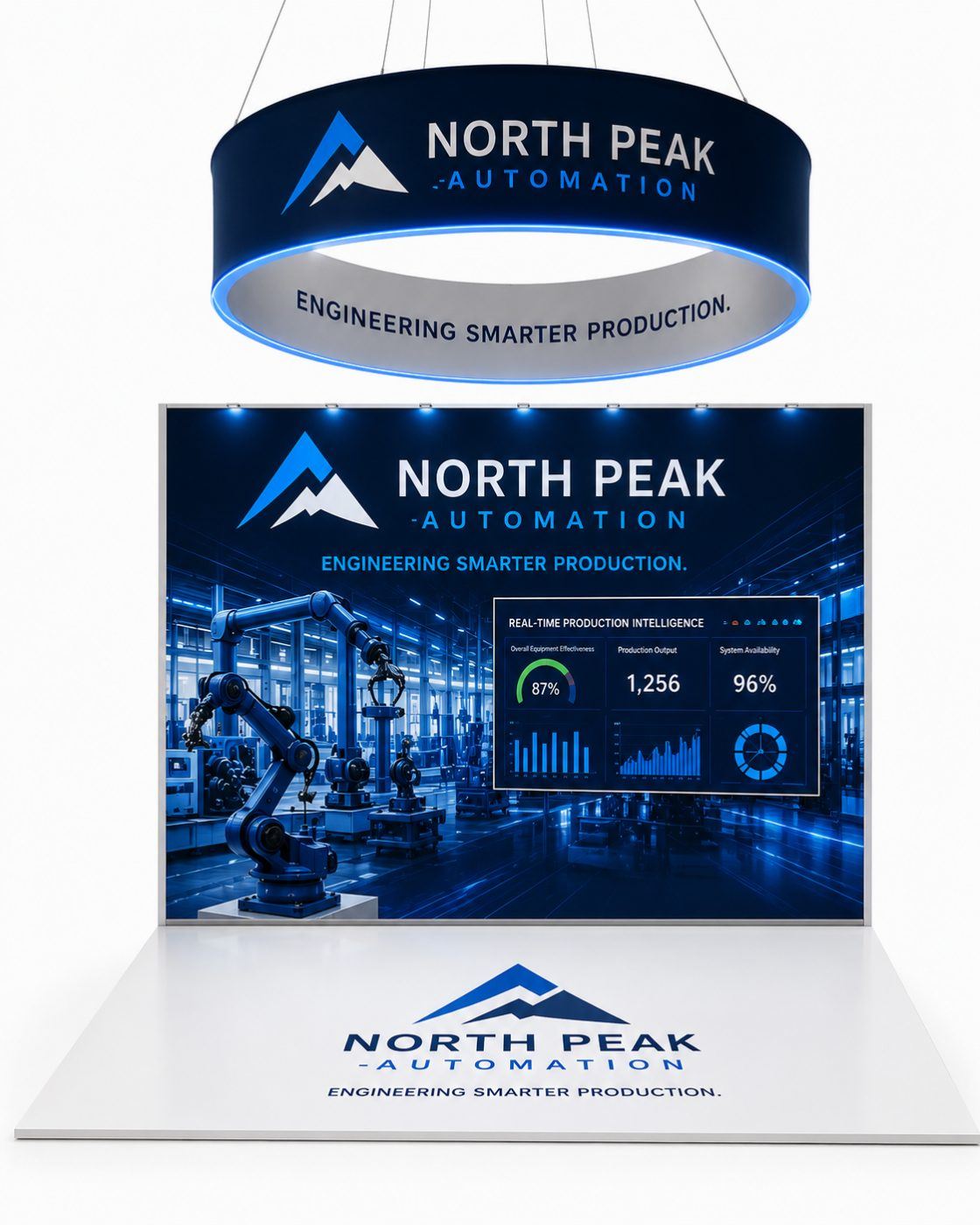
The illuminated backwall — the showpiece. A backlit tension-fabric wall with a glowing hanging ring reads from across the hall, not just at the table. This is where the money goes, and it earns its keep only if you're exhibiting enough to amortize it. Larger displays can be rented or purchased, so let the calendar drive the decision. Shows all year? Build the curated setup piece by piece. One show on the books? Rent, or start smaller.
None of this requires the biggest booth on the floor. It requires the right pieces for the number of shows you're actually doing.
Fabric or rigid — and why it matters more than it sounds
Tension fabric packs into soft cases, resists creasing, ships cheaply, and can be washed. Rigid panels hold a flatter, sharper surface and suit a booth that stays put. If the display travels, fabric almost always wins — and the shipping difference across a year of shows is frequently larger than the price difference between the two systems.
The same logic applies to trade show displays and retractable banners generally: the cost of owning a display is the freight and the drayage as much as the purchase.
Where the return actually comes from
The booth gets you noticed. The follow-up gets you business.
The exhibitors who win treat the 48 hours after the show as the main event. A great booth starts the conversation; the follow-up is what turns it into work.
So plan the follow-up before you order the backwall. Decide who's sending what, to whom, and on which day, before anyone argues fabric versus rigid panel. A modest booth with disciplined follow-up outperforms a beautiful booth without it every time.
If you're exhibiting this year
- Count your shows. One or two? Rent, or build a banner-and-table setup. Four or more? A curated system pays for itself and looks deliberate rather than assembled.
- Write the follow-up plan first. Who contacts leads, how fast, and with what offer. Put a name on it.
- Then design the booth. Backwall, retractables, counter, literature, takeaway.
- Work back from the real deadline. Find out when materials have to ship or be on-site, then build in room to design, proof, and handle incidentals. Rushing any of those is where quality and budget both slip.
The two pieces that leave the hall
Everything in the booth stays. Two things go home with the attendee: whatever you handed them and whatever they took. Branded promotional products chosen for genuine utility keep working on a desk for months, and printed brochures and leave-behind collateral are what get pulled out when your conversation comes up internally two weeks later.
Related questions
Should I rent or buy a trade show display?
Let the calendar decide. One or two shows a year favors renting the large elements or building a retractable-banner-and-table setup you own outright. Four or more shows a year makes purchasing a curated system cheaper per show, and a system you own looks deliberate rather than assembled. The break-even is usually around the third show.
What is the minimum a small booth needs to look professional?
A retractable banner, a fitted table throw, and something printed to leave behind. Those three make a bare 10x10 or a shared table look intentional, travel in a car, and set up in minutes. Everything beyond that improves reach across a hall rather than credibility at the table.
How far ahead should I order booth graphics?
Work backwards from the show's material deadline, not the show date. Advance-warehouse shipping cutoffs frequently fall two to three weeks before the floor opens, and you want proofing time before that. Four to six weeks ahead is comfortable for a full system; two weeks is workable for banners if artwork is ready.
Fabric or rigid panel graphics?
Tension fabric packs into soft cases, resists creasing, ships cheaply, and is machine washable — which is why it dominates travel booths. Rigid panels hold a flatter, sharper surface and suit permanent installations or booths that stay in one place. If the display flies or ships to multiple cities, fabric is usually the right call.
What should I actually give away at a booth?
Something with a job. Bags outperform every other category because a tote gets carried into rooms full of people who never met you. Pens are useful and cheap but among the shortest-kept items, which makes them a floor giveaway rather than your one branded thing. Buy fewer, better items rather than a thousand forgettable ones.
How do I know whether the show paid off?
Decide the measure before you go: qualified conversations, booked follow-up meetings, or pipeline created within 90 days. Comparing show cost against $1,039 — CEIR's figure for meeting the same prospect in the field — reframes the question from cost to cost avoided. Booth spend without a defined measure is the reason most exhibitors can't tell you whether it worked.
What printed material should I bring to a show?
One strong leave-behind rather than a literature rack. A single well-designed overview that survives a briefcase does more than five brochures that get recycled at the airport. Bring more business cards than you think you need, and if you sell something configurable, a one-page spec sheet you can write on during the conversation.
How do I make a 10x10 booth stand out?
Work vertically and keep the front open. Height reads down an aisle where table-level graphics don't, so a tall backwall or a hanging element buys more attention than anything on the table. Say what you do in a few words readable from 20 feet, light the space, and leave room for people to step in rather than blocking the front with a table.
Can I reuse booth graphics for other events?
That's the argument for designing them as a system. Retractable banners, table throws, and fabric panels work at chamber events, job fairs, open houses, and in your own lobby between shows. Keeping dated information — show names, years, specific pricing — on separate swappable panels means the expensive pieces stay usable for years.
How soon should I follow up after a show?
Within 48 hours, while your booth is still a specific memory rather than one of thirty. Sort leads before you leave the hall, send the promised information first, and reference something from the actual conversation. Leads from a show close in an average 3.5 sales calls against 4.5 from other sources — but that advantage decays fast if nobody calls.
Talk to us about your project
AlphaGraphics San Antonio — Shavano Park serves Shavano Park, Castle Hills, Stone Oak, Helotes, Boerne, New Braunfels, and the surrounding communities from 16101 College Oak Drive. Call (210) 222-0580 or request a quote and we will get you an answer the same business day.