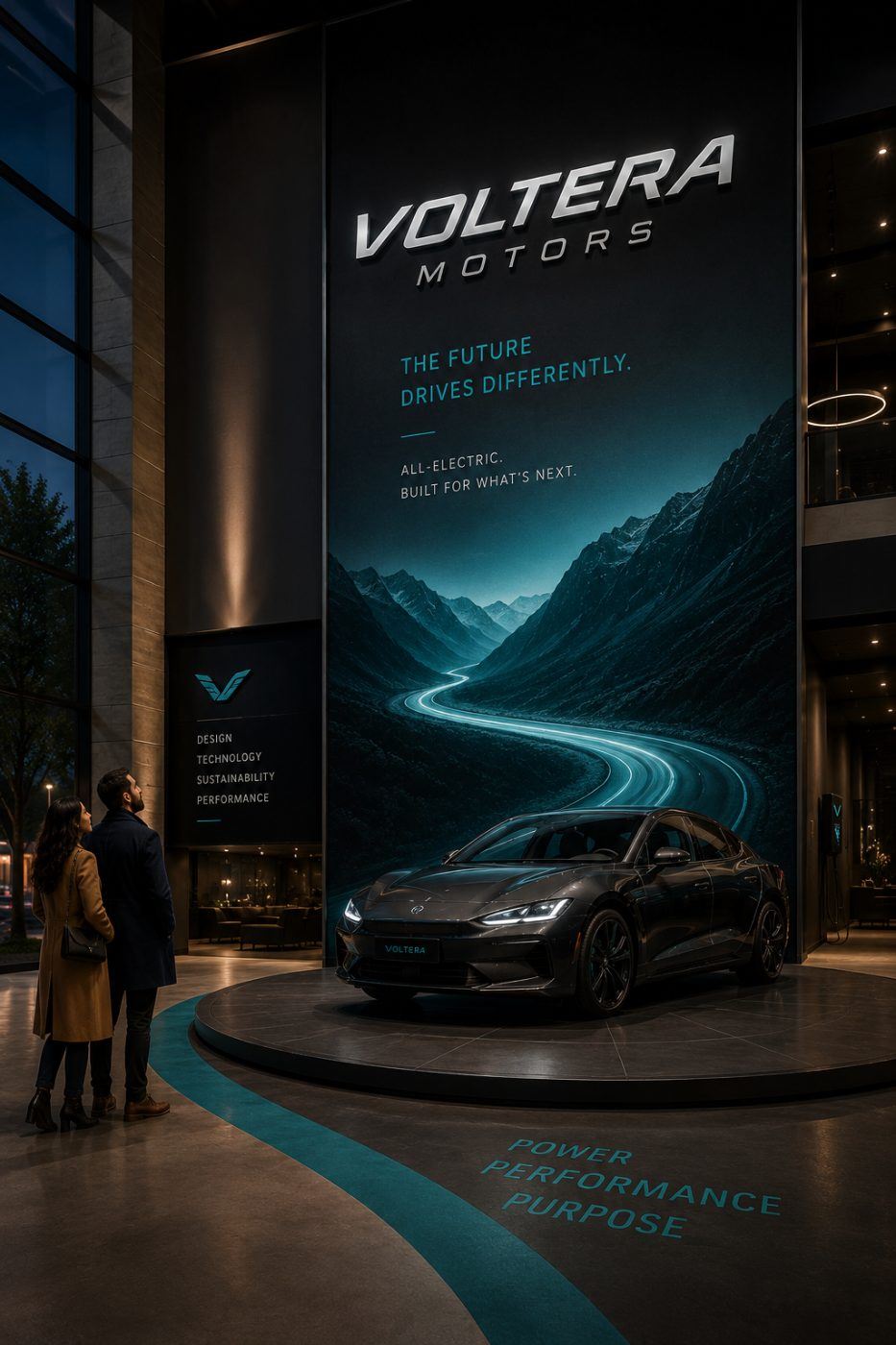
Yes — if it says one thing, in a spot where the right people actually look. Big doesn't earn attention. Placement earns attention; clarity keeps it. A bold sign on a wall nobody passes is a cost with no audience. Put the same sign where your customers already are — and give it one message they can read in a glance — and large format does what nothing else in your budget does: you pay once, and it works every day after.
Start with the eyeballs, not the wall
The usual pitch — "you already rent the lobby, so brand it" — gets it backwards. A surface you own is only worth printing if people see it. Before you pick a format, answer one question: where is my customer already looking? Then put the sign there.
High-traffic frontage and windows. The glass you already have faces the sidewalk and the parking lot all day. Window and wall graphics turn the busiest surface you own into a 24/7 salesperson — working after you've locked up.
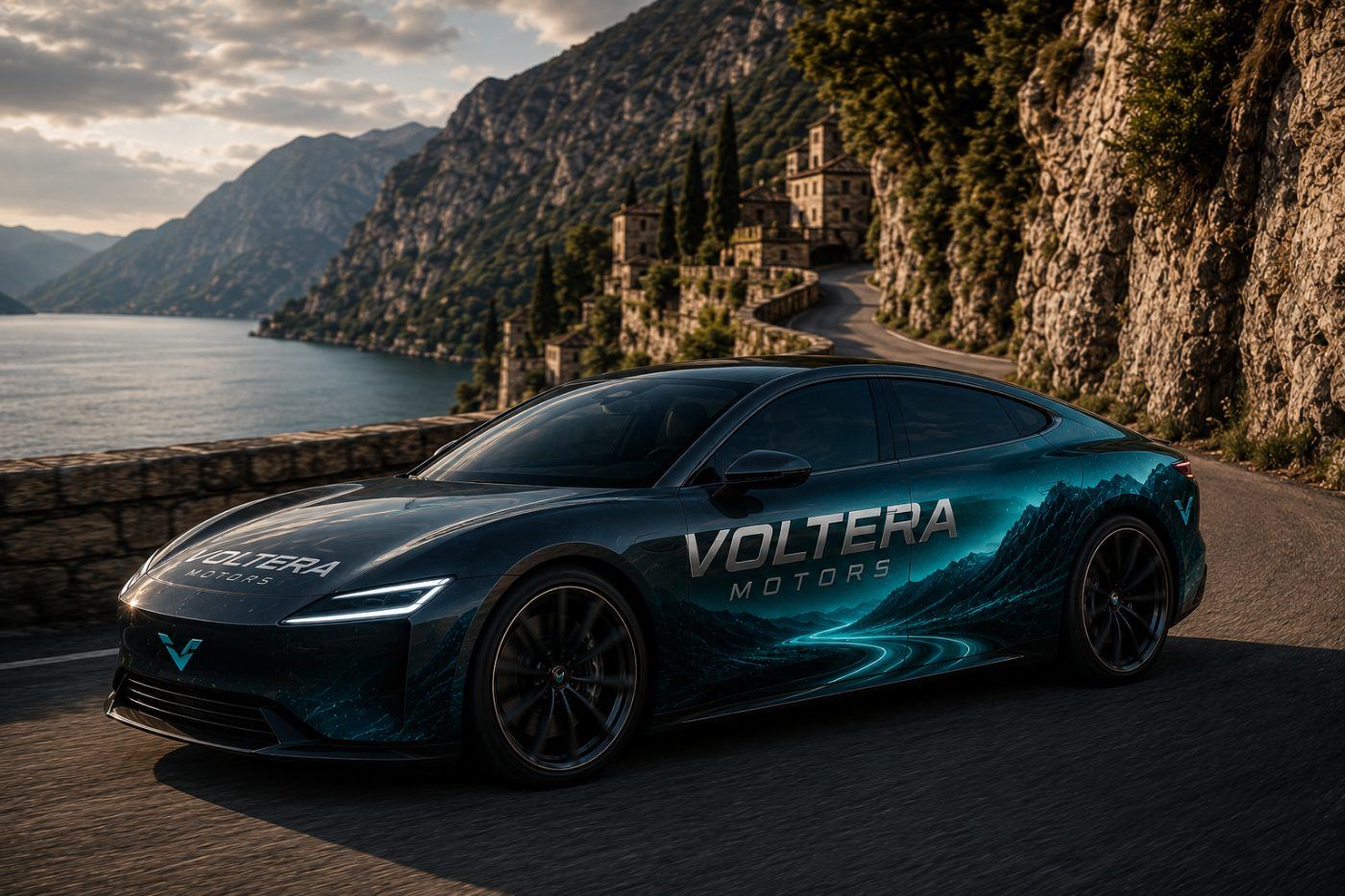
The vehicle you already drive. The one most owners underestimate. Every other sign waits to be walked past; a vehicle wrap drives to where the customers are — the job site, the parking lot, the light at Loop 1604 and Blanco at 5:15pm. It's the only large-format piece that changes its own location to find its audience.
The moment people are already waiting. Lobbies, queues, exam rooms, checkout lines. Here a wall people do sit in front of becomes useful — not because you rent it, but because you have a captive, decision-ready audience with nothing else to read.
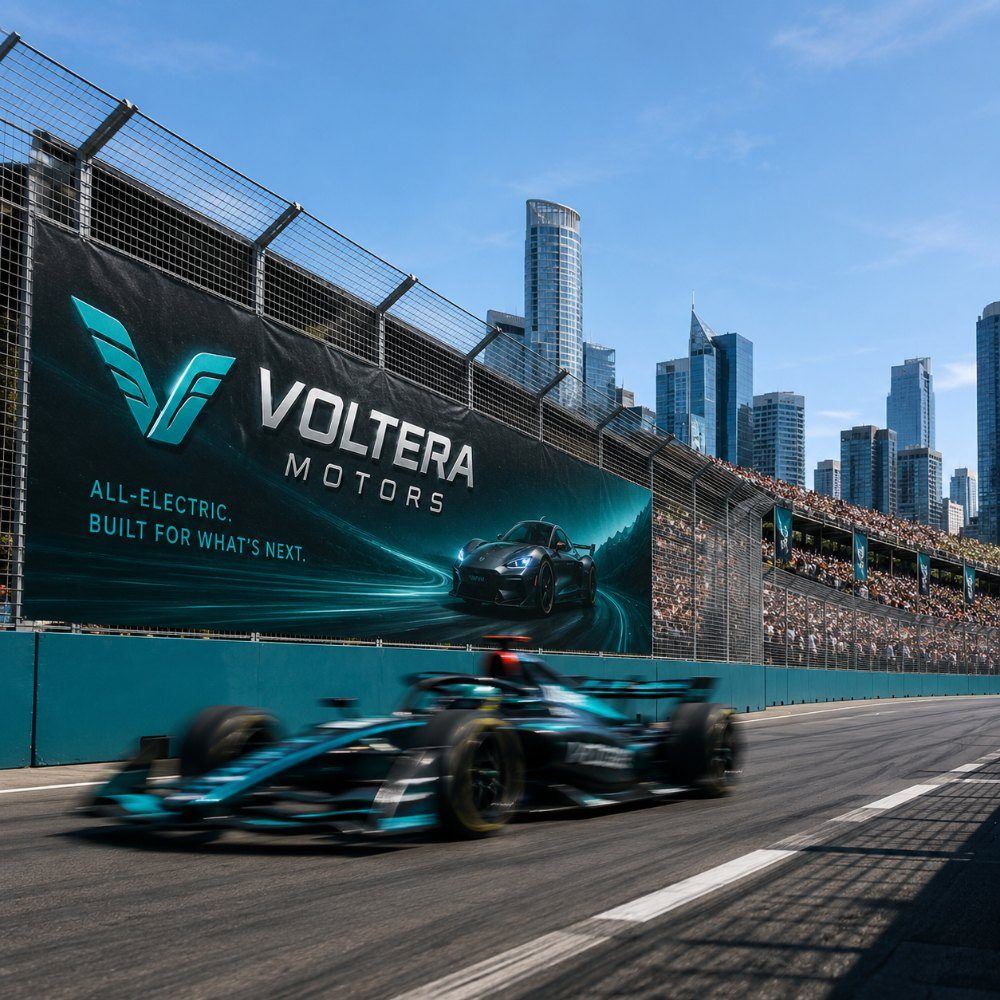
Banners, where the event brings the crowd. A grand opening, a seasonal push, a job site. The audience shows up for the occasion; the banner just has to be there and be clear.
Match the format to how long the audience lasts
Once you know where the eyeballs are, the format almost picks itself — by how long that audience keeps coming.
A day to a season → a banner. Fast to produce, easy to swap when the message changes.
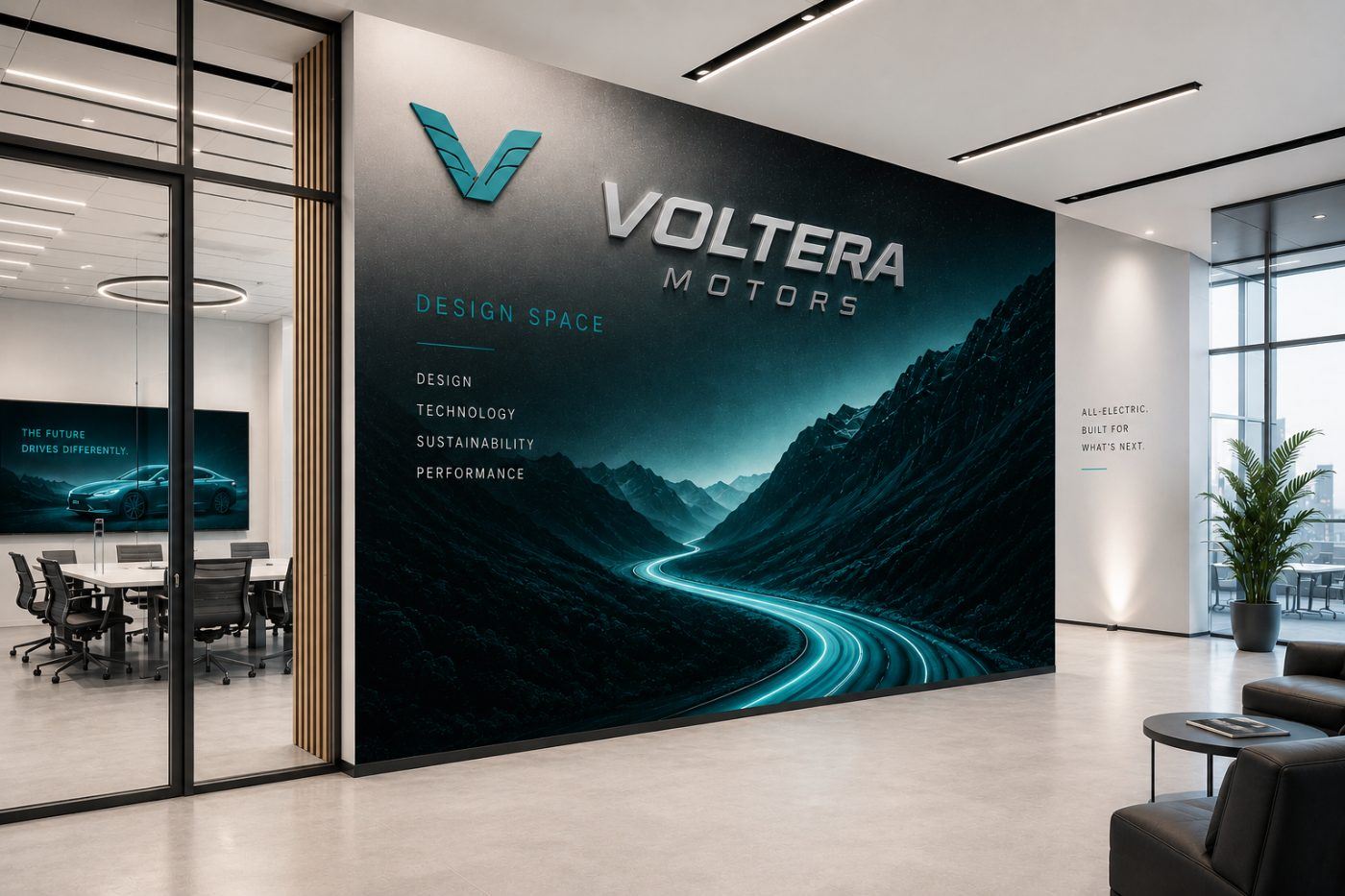
A lease → window film or wall graphics. Permanent enough to matter, changeable when you rebrand.
Five to seven years on the move → a vehicle wrap. Rolling exposure that compounds every mile.
As long as the doors are open → channel letters. Dimensional, lit, legible at dusk in February. This is what says we're not going anywhere.
Material is a South Texas decision
Sun and wind are what actually retire large-format graphics here, not age. A standard 13oz scrim banner is fine for a seasonal push; once a banner gets large or the site is exposed, mesh vinyl matters because it lets air through and takes the load off the grommets and the wall. Hemmed edges and reinforced corners cost little and are the difference between one season and three.
Interior surfaces have their own constraint: smooth drywall and glass take film beautifully, lightly textured walls need a conformable material, and cinderblock or stucco usually calls for a mounted panel instead of an applied graphic. That is a survey question, not a design question.
Clarity is what makes big pay
One message, read from 100 feet.
Size amplifies whatever the design already says, so the sign that wins is the one reduced to a single idea. Vehicles are the strictest version: people read a wrap at 40 mph, in a mirror, for two seconds. Name, what you do, one way to reach you.
Reduce it to one message and a modest, well-placed sign outperforms a bigger one — which is good news for the budget, because placement and clarity cost nothing to get right.
How to spec it
- Count the eyeballs first. Where does your customer already look — and how many, how often? Put the sign there before you size it.
- Write the one sentence. Name, category, or offer — pick one. Not all three.
- Set the reading distance. 100 feet across a lot is a different piece than 15 feet in a lobby. Distance sets type size; type size sets how much copy fits.
- Match material to how long the audience lasts. A day, a lease, or years? That picks the substrate before anyone discusses price.
- Check the install before you design. Wind load, wall surface, permits — or for a wrap, the seams, handles, and curves that eat a logo. A file that can't be installed is a costly PDF.
Let's put your sign where it pays off
Banners, window and wall graphics, vehicle wraps, channel letters, and grand-format printing — designed, produced, and installed in Shavano Park. We'll help you find where your customers already look, land on the one message, and match the material to how long it needs to work.
Related questions
How large should a banner's lettering be?
Work from reading distance: roughly one inch of letter height per 10 feet of viewing distance as a floor, and more when traffic is moving. A banner read from 100 feet needs 10-inch letters at minimum. Set the distance first, because it decides type size, and type size decides how much copy can fit — usually far less than owners expect.
How long does an outdoor banner last in South Texas?
A standard 13oz scrim vinyl banner holds up well for a season or two of outdoor exposure; heavier substrates, hemmed edges, reinforced grommets, and wind slits extend that. Full sun and wind are what kill banners, not age, so mounting method matters as much as material. For anything intended to last years outdoors, a rigid panel or dimensional sign is the better spend.
Mesh or solid vinyl for a large outdoor banner?
Mesh, once the banner is large or the site is windy. Mesh vinyl lets air pass through, which dramatically reduces wind load on the banner and its mounting points — the usual reason big banners tear or pull their grommets. The trade is slightly less color density, which is rarely noticeable at the distances grand-format banners are read from.
Can wall graphics be installed on textured walls?
Sometimes, with the right material. Smooth drywall, glass, and painted metal are ideal. Lightly textured walls need a conformable film and often a specialty adhesive, and heavily textured surfaces such as cinderblock or stucco usually call for a different approach entirely — a mounted panel rather than an applied film. A site survey answers this before artwork is drawn.
Which large-format option gives the most exposure for the money?
For a business with vehicles, the wrap — it's the only large-format piece that changes its own location to find an audience, at roughly 35¢ per 1,000 views over a 5–7 year life. For a business with frontage, window graphics, because you already pay rent on the glass. The right answer follows the traffic you already have, not the surface that's easiest to print.
Do I need a permit for a large banner or wall graphic?
Often, yes — temporary signage is regulated in San Antonio, with limits on size, duration, and placement, and permanent wall graphics visible from the street can be treated as signage. Landlord approval is a separate requirement. Confirm both before production, because a duration limit can change whether a banner or a permanent sign is the better purchase.
How long does an outdoor banner last in South Texas?
Sun and wind retire large-format graphics here, not age. A standard 13oz scrim banner handles a seasonal push of a few months; hemmed edges and reinforced grommets meaningfully extend that for little money. Once a banner gets large or the site is exposed, mesh vinyl lets wind through and takes load off the grommets and the wall — the single most common cause of early failure.
What can I put on an interior wall?
It depends on the surface, which is a survey question rather than a design one. Smooth drywall and glass take adhesive film beautifully. Lightly textured walls need a conformable material. Cinderblock, brick, and stucco usually call for a mounted panel instead of an applied graphic, which also makes it easy to change later.
How large should the lettering be?
Work back from the reading distance: roughly one inch of letter height per 10 feet, and more where traffic moves fast. That calculation is what limits how much copy fits, which is why the message has to be settled before the size. If the words will not fit at legible size, the answer is fewer words, not smaller type.
Can the same design run across a banner, a window, and a vehicle?
The design system can and should — same logo, same colors, same type — but each piece needs its own layout, because each is read at a different distance and speed. A window graphic can carry more detail than a wrap; a wrap can carry more than a banner seen from a highway. Building them together from one file set is what keeps them recognizably the same.
Talk to us about your project
AlphaGraphics San Antonio — Shavano Park serves Shavano Park, Castle Hills, Stone Oak, Helotes, Boerne, New Braunfels, and the surrounding communities from 16101 College Oak Drive. Call (210) 222-0580 or request a quote and we will get you an answer the same business day.